Patio Concrete Coating in Roselle, IL

A colored, textured flake coating bonded onto the patio, porch or walk on the shaded side of a Roselle house, built for a slab that sits under a deck, a roof or the trees, stays damp longer than the rest of the yard and needs a surface that grips and hoses clean.
Coated concrete patio running out from the back of a house

A flake floor for the slab that lives in the shade

A patio concrete coating is an epoxy flake system bonded directly onto the concrete that is already outside. The slab is ground clean, primed and coated, a blend of colored flake is broadcast into the wet coat, and a clear topcoat formulated for outdoor use is laid over it to lock the flake in and take the weather. The result is one continuous, colored, textured surface across the whole slab, with no bare gray concrete, no pour lines and no patch of green anywhere you look from the house.

Not every patio sits in the sun. The slab under a deck, the covered porch, the walk along the north side of the house and the patio under a big maple spend most of the year in shade, and shade changes what a slab needs. It stays damp longer after rain, it dries slowly in spring and fall, leaves and seed sit on it, and bare concrete in those conditions goes dark, grows a green film and gets slick underfoot. A flake coating gives that slab a sealed surface that nothing grows into, a texture that grips when it is damp, and a color chosen to brighten a part of the yard that does not get much light.

The job is quoted from what we see standing on the slab. Patios and outdoor slabs we have coated are on the gallery.

Outdoor slab finished with a textured flake coating
Bare shaded concrete with varied shades before coating

Damp, leaves and a floor that stays clean in the shade

A coated patio in the shade is cleaned with a hose and a stiff brush. Leaf stain, seed, pollen, bird mess and the mud the dog brings round the side of the house all sit on the sealed surface instead of soaking into porous concrete, so a rinse takes them off and the floor dries evenly rather than in blotches. There is nothing for a green film to take hold in, because the slab is never exposed.

The texture is the safety feature, and it matters more on a slab that is damp for weeks at a time. The flake stands slightly proud of the coat it is broadcast into, the topcoat is finished over it rather than flooded across it, and the result is a surface with grip built in rather than added. On the walk to the back gate, the steps down from a deck or the porch by the side door, that is the difference between a slab you warn visitors about in October and one you do not think about.

Color does the rest. A shaded slab reads darker than the same concrete in the sun, and a flake blend chosen for shade, lighter and warmer than you might pick for an open patio, brings a dim corner of the yard up rather than sinking it further. Winter is harder on a shaded slab than on a sunny one, because the ice on it does not melt by noon, and a sealed surface is the answer to that as well: water cannot soak into the slab and freeze inside it, which is what opens bare concrete up, and the salt, the ice and the shovel all land on the topcoat instead.

Under the deck, the covered porch and the north-side walk

The slab under a raised deck is the most shaded floor on most lots and the one most often left bare. Coated, it becomes a usable lower patio rather than a damp storage space, with a colored, textured surface that takes the drip lines from the deck above, dries clean and gives the furniture a floor worth standing on.

A covered porch or a roofed patio is the second. It is out of the rain but not out of the damp, it is walked on in every season, and it is seen from inside the house all year. A flake floor there reads as an outdoor room rather than a slab with a roof over it, and the blend can be picked to sit with the siding, the brick and the trim.

The north-side walk, the path round to the gate and the stoop by the side door connect the front of the house to the back, and they are the slabs that ice first and dry last. They take the same coating, with the texture set for a path that is walked on wet, so the whole run from the driveway to the yard reads as one surface and grips the whole way.

Blend, texture and a topcoat chosen for less sun

The flake blend is the color decision, and in shade it is judged in the light the slab actually gets rather than under an open sky. Lighter, warmer blends lift a dim slab and stop it reading as a dark strip beside the house; quieter stone tones suit a covered porch that should recede behind the furniture. Because the slab is seen from the house more than it is stood on, the color is chosen from the window as much as from the ground.

How much grip the floor has is set by the density of the broadcast and the weight of the topcoat over it, and on a shaded slab the grip is usually pushed further than on an open patio. A path or a set of deck steps that stays damp gets a full broadcast under a lighter topcoat, so more of the flake stands proud; a covered porch where chairs are pulled in and out gets a heavier topcoat over the same flake, smoother to hose and still with grip in it.

The topcoat is what makes an outdoor floor different from an indoor one, shade or not. It is a clear, UV-stable finish formulated to hold its color and clarity through the hours of sun a shaded slab still gets in the morning and the evening, to stay bonded through freeze-thaw and standing damp, and to take a hose, a stiff brush and a snow shovel without wearing through. A polyaspartic topcoat can be specified over the flake where a harder-wearing, fast-cure finish suits the job.

Getting a slab that never fully dries ready to coat

A shaded slab has been through a different kind of weather from a sunny one. It has held damp for months at a time, it has had leaves and soil sitting on it, and its surface has often gone dark and soft where growth has taken hold. Whether the coating stays down through its first winter is decided in the preparation, so that is where the work goes.

The whole slab is diamond-ground open, which takes off the growth, the leaf stain, any old sealer or paint and the laitance in one pass and leaves clean concrete for the system to key into. Then the faults are dealt with one by one: cracks opened out, cleaned and filled flush; chipped edges and the nosings of deck steps rebuilt in a repair mortar; pitted and spalled patches filled and ground level. The coating goes over one continuous plane, not over every mark the old surface carried.

Damp is planned for before the first coat goes on. Where a slab needs it, the system is built on a moisture-tolerant primer so the floor stays down on concrete that is slow to dry. Water should leave the slab rather than sit under the deck or against the wall, and where it does not, correcting the fall in the preparation is an option we talk through at the visit. The coating is then terminated cleanly at the house wall, the deck posts, the door threshold, the lawn edge and any drain, so there is no open edge for water to get behind and work at through the winter.

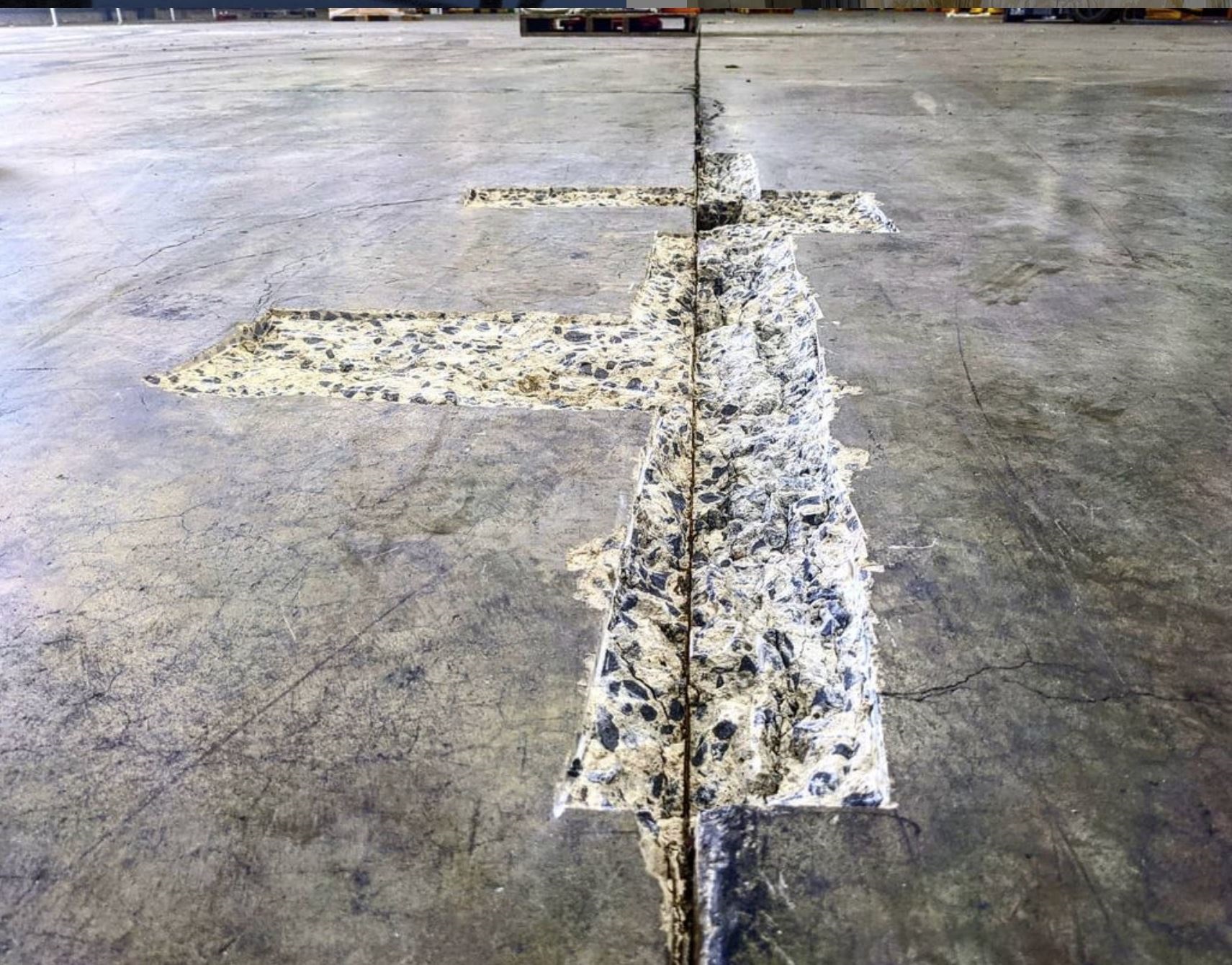
Cracked and chipped outdoor concrete before repair and coating

Seeing the slab in the shade before we price it

We come out and look at the slab with you, walk the whole area, look at what is on the surface and how the concrete has behaved through past winters, and talk through the blend, the texture and where the grip needs to be strongest. The visit is free.

A shaded slab raises its own questions: how far the growth has gone into the surface, whether the slab is falling the right way under the deck, whether an old sealer or paint is coming off cleanly, and how the coating should meet the deck posts and the house wall. Those get answered on the slab, from experience with patios like it, not from a photograph.

The job is quoted from that visit. Where part of the slab needs more than a coating can fix, or the concrete is honestly past coating, you hear that at the visit rather than once the grinder is running.

Diamond grinding an outdoor slab open before the first coat

Roselle yards, mature trees and the shop down the road

Our shop is on West Lake Street in Roselle, so a patio here is coated a few minutes from where the crew starts the day, by the people who looked at the slab with you.

Roselle's yards are mostly behind the ranches, split-levels and two-story homes of the village's subdivisions, and the trees planted around them are mature now, so a good share of the patios, porches and side walks here spend the summer under a canopy. Those are exactly the slabs a flake coating does the most for: one colored, textured surface that dries clean, grips when it is damp and stops a shaded corner of the yard being the one nobody uses.

Get the shaded slab behind your Roselle house coated

We work throughout Roselle and the surrounding suburbs from our own shop here, with our own crew rather than subcontracted labor. The visit is free and commits you to nothing. Tell us where the slab is, what is on the concrete now and what it should look like from the house, and we will recommend a flake blend and a texture for each part of it, explain how the old surface will be prepared and quote the job. Call (630) 206-5602 or email info@evolveconcretecoating.com to arrange a visit. We answer Monday to Sunday, 9 AM to 6 PM.

Areas We Serve

Proudly delivering professional concrete coatings across these Illinois suburbs and surrounding communities.

Every Floor Starts With a FREE Estimate

Contact Us

Thank you! Your submission has been received!
Oops! Something went wrong while submitting the form.