Patio Concrete Coating in Geneva, IL

A textured, colored finish for Geneva patios, paths and porches that pulls an original slab and everything added to it since into one surface, with grip that stays put where people actually walk.
Patio concrete coating on a finished outdoor slab

One surface across concrete that never matched

Most patios that have been in a yard for any length of time are not one slab. There is the original, then the piece added when the yard got rearranged, then the patch where something was dug up and made good, and all three cure differently, weather differently and end up different colors. A coating takes the whole area and finishes it as a single surface in a color you pick, so what you see is a patio rather than a record of everything that has happened to it.

The texture is built into the coating rather than borrowed from the concrete underneath. Chips are broadcast into the base coat while it is wet and held under a clear topcoat, which gives the surface its color and its grip in the same operation. That matters outdoors: grip that comes from the coating stays where it is put, whereas a texture relied on from the slab below polishes away first along the line everybody walks.

Underneath all of it, the concrete stops behaving like an open surface. Sealed concrete does not drink up rain and meltwater the way weathered slab does, and it stops powdering underfoot and leaving chalk on shoes and furniture legs. Leaves, pollen and spills wash off a closed surface instead of soaking into an open one. Outdoor work we have finished is on the gallery.

Sealed concrete patio in a Geneva yard
Untreated concrete slab with varied shades where pours meet

The patio, the path and the step at the door

The patio itself is the main area and the most forgiving. It is open, it gets crossed barefoot in summer and in boots the rest of the year, and it carries furniture that gets dragged rather than lifted. What it wants is a closed surface with enough texture to be safe after rain and a color that still matches itself after a few full summers of direct sun.

The path is the harder case, and on a larger lot there is usually more of it than people count: from the drive down the side of the house, around to the back, out to a shed or a garage. A path concentrates every trip into the same narrow strip, so wear and polishing land in one place rather than spreading out. Building the grip into the coating is what keeps it there.

Steps and the porch are worth specifying on their own. A step is where a wet or icy surface actually causes an injury, it is a small area so a higher texture costs very little, and it takes the most concentrated traffic of anything outside. A covered porch is the opposite: sheltered from most of the weather, usually more visible than the patio, and able to carry a smoother and better-looking finish than the open slab it leads onto.

A patio you use instead of plan around

The space stops being seasonal. A sealed, textured slab is usable earlier in the spring and later into the fall, because it is not holding surface water, not slick after rain, and not growing the film that a bare slab collects over a wet month.

The upkeep drops to sweeping and a wash. Marks that would have soaked into open concrete come off a closed surface instead, and there is no annual routine of resealing or scrubbing at something that went in months ago. That changes how the space gets treated: a patio you are happy to put a table and chairs out on is one that actually gets used, rather than the part of the yard you work around.

It also matters that most patios are looked at more than they are stood on. From a kitchen window or a back door, the patio is the largest single thing in view, and a mismatched, chalky slab reads as unfinished no matter what is planted around it. One even surface changes how the whole yard reads from inside the house.

Blend, texture and a topcoat that holds color

The blend is the first decision. A denser broadcast gives a busier surface that hides pollen, leaf marks and the general traffic of a yard, and it is the practical choice for a slab that sits under trees. A lighter blend reads calmer and closer to a single color, which suits a patio meant to be an extension of the house rather than part of the garden.

Texture is the second, and it is specified area by area rather than everywhere at once. The amount of grip that earns its place on a set of steps or at a threshold is a nuisance across an open patio that people cross barefoot, so it makes sense to vary it and to decide it while looking at where people actually walk.

The topcoat is the third and it is the specification decision that genuinely separates an outdoor floor from an indoor one taken outside. Outdoors it has to hold its color under direct sunlight for years rather than months, and a slip-resistant additive can be broadcast into it in the areas that need more grip than the rest. Metallic epoxy is an indoor finish and does not go on a patio.

Where the water goes, and what the slab will take

Drainage comes before anything else outside. A patio is laid with a slight fall so water runs off it, and settlement, an added section or a raised bed can quietly interrupt that and trap water against the slab instead. We look for it on the visit and tell you what we find, because coating over standing water is treating the symptom.

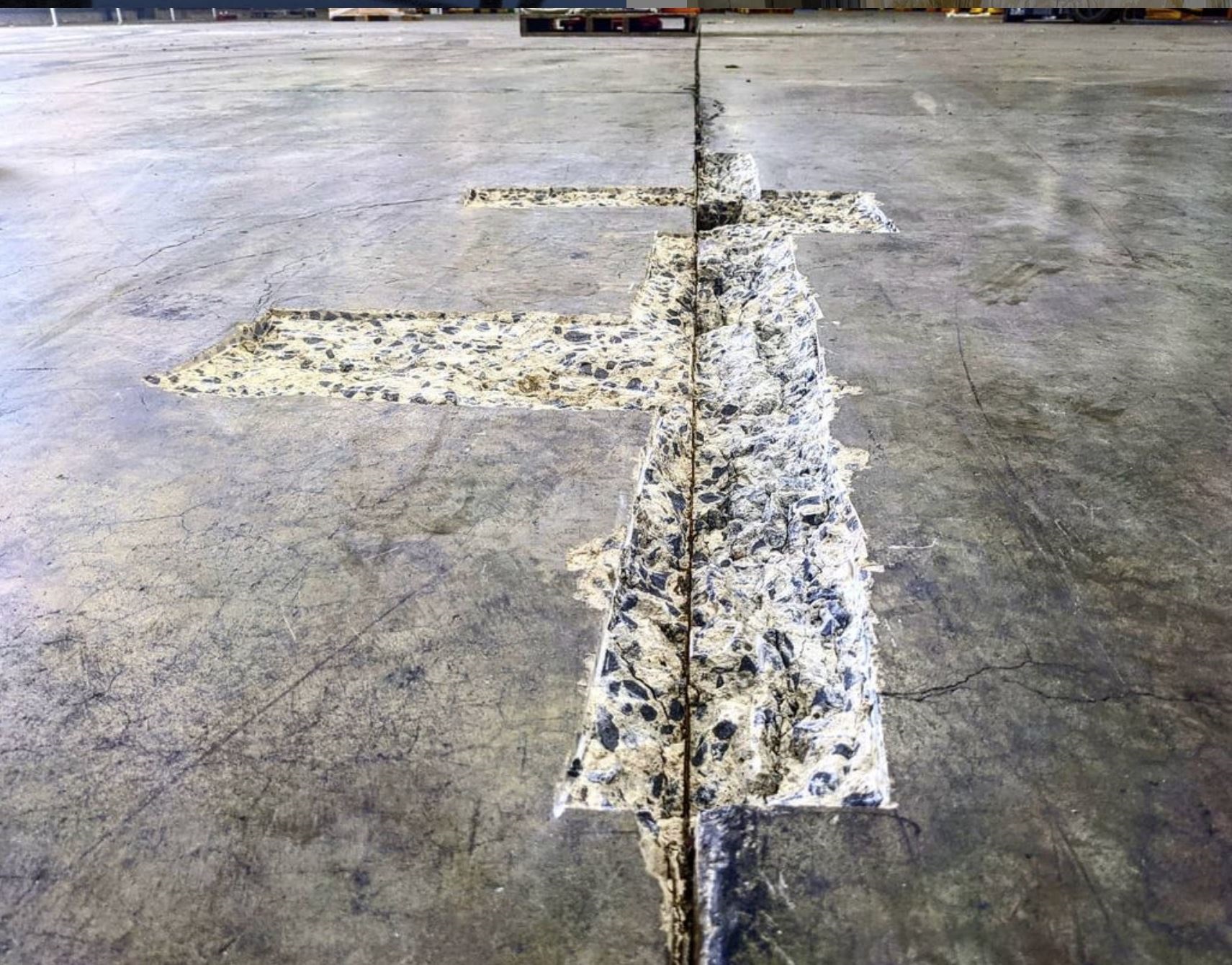
The preparation itself is the same discipline used indoors and it counts for more outside. The slab is diamond-ground open so the system keys into it mechanically, laitance and any previous sealer come off, and cracks and control joints are opened out and filled before the first coat goes down. Where two pours meet, that joint gets treated properly rather than coated across and left to reappear.

The edges are what decide how long an outdoor floor lasts. A patio has exposed perimeter on most of its sides and every one of those is somewhere water can get underneath if the termination is wrong, so they are cut in and detailed by hand rather than rolled up to. If the fall is the real problem, no finish laid over the top will fix it, and it is better to know that before spending anything.

Cracked and chipped concrete before repair and coating

Looking at the slab before we price it

We come out and look at the patio before quoting, because outdoor concrete varies far more than indoor concrete and the condition of yours decides what is realistic. We measure up, check for spalling and cracking, look at how the surface takes water, and see where the water actually goes when it rains rather than where it is supposed to go.

Then color and texture get chosen outdoors on the slab itself, in daylight. Both look different outside than they do on a sample card indoors, and on an area this size that difference is worth an extra twenty minutes at the visit.

You get a written specification covering the preparation, the joint and crack work, the coats, the topcoat and the texture by area. If the slab is too far gone to take a coating and would be better broken out and repaired, we will say so rather than take the work and hand back a finish sitting on concrete that is failing underneath it.

Diamond grinding a slab open before the first coat

Geneva yards and patios that grew over time

We cover Geneva and the surrounding Kane County area from our shop in Roselle. A lot of the housing here sits on generous lots with mature yards, and that produces a particular pattern outside: an original patio off the back of the house, a path running down the side to the drive, and hard standing that has been added to or altered more than once as the yard changed.

That is the case a coating handles well. Concrete poured years apart will never match, and no amount of cleaning brings it together, so the choice is either to live with it or to finish the whole area as one surface. The other thing worth knowing is that outdoor slabs here have a harder life than most people credit, and it is not the cold that does the damage so much as water getting into an open slab and freezing inside it. Keeping the water out is the most useful thing a coating does for the concrete under it.

Book a slab check on your Geneva patio

We work throughout Geneva and the neighboring Kane County communities from our shop in Roselle, with our own crew rather than subcontracted labor. The visit is free and commits you to nothing, and on outdoor work it is worth booking early, because a slab that is already losing its surface will only lose more of it over another winter. You will get a straight answer on whether your concrete is a candidate for a coating at all, color and texture chosen outdoors in daylight on your own patio, and a written quote you can hold against any other. Call (630) 206-5602 or email info@evolveconcretecoating.com to arrange it. We answer Monday to Sunday, 9 AM to 6 PM.

Areas We Serve

Proudly delivering professional concrete coatings across these Illinois suburbs and surrounding communities.

Every Floor Starts With a FREE Estimate

Contact Us

Thank you! Your submission has been received!
Oops! Something went wrong while submitting the form.