Metallic Epoxy Flooring in Winfield, IL

Hand-poured metallic epoxy floors for Winfield homes and businesses, built around the first and biggest decision a metallic floor asks of you: whether the room wants a dark floor or a light one, and what each does to the space above it.
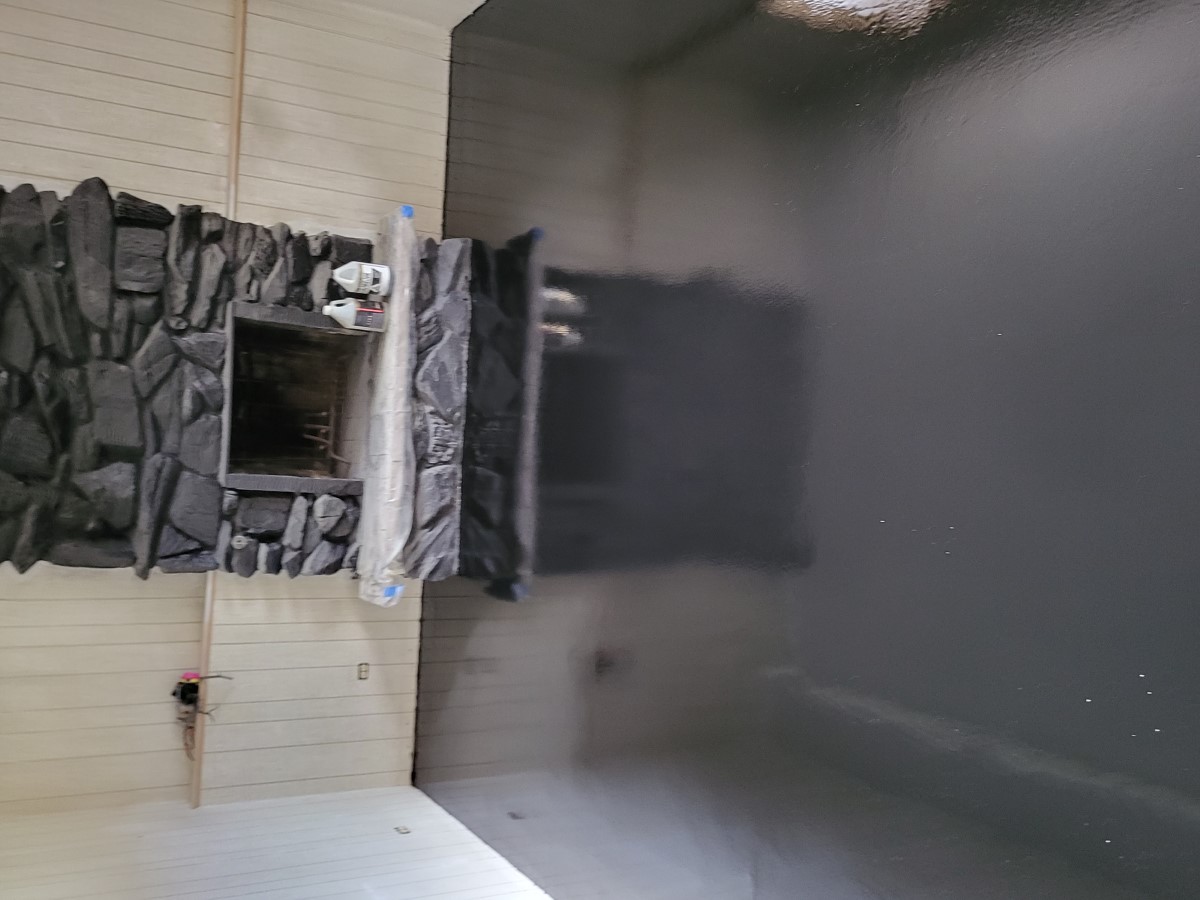
Dark metallic epoxy floor reflecting a stone fireplace and light paneled walls

Dark or light: the first decision on a metallic floor

Metallic epoxy is a poured resin floor in which the color and the movement are made inside the coat itself. A tinted base goes down, a metallic pigment is worked through the wet coat by hand so it drifts, pools and separates, and a clear topcoat locks the effect under a hard wearing layer. It cures into one seamless surface with real depth in it, and because the pigment is moved by hand while the coat is wet, no two floors come out the same.

Before any of that is decided, the floor is dark or it is light, and everything else follows from which. A dark metallic, a charcoal, a deep bronze, a black with a pale pigment moving through it, anchors a room, makes the walls and the furniture stand off it and reads as depth. A light metallic, a pearl, a pale gray, a warm white with a darker pigment worked through it, reflects the light it is given, opens a room up and reads as space. Neither is the better floor. They do opposite things, and the room decides which one it wants.

We quote the job from what we see at the visit. Metallic floors we have poured, dark and light, are on the gallery.
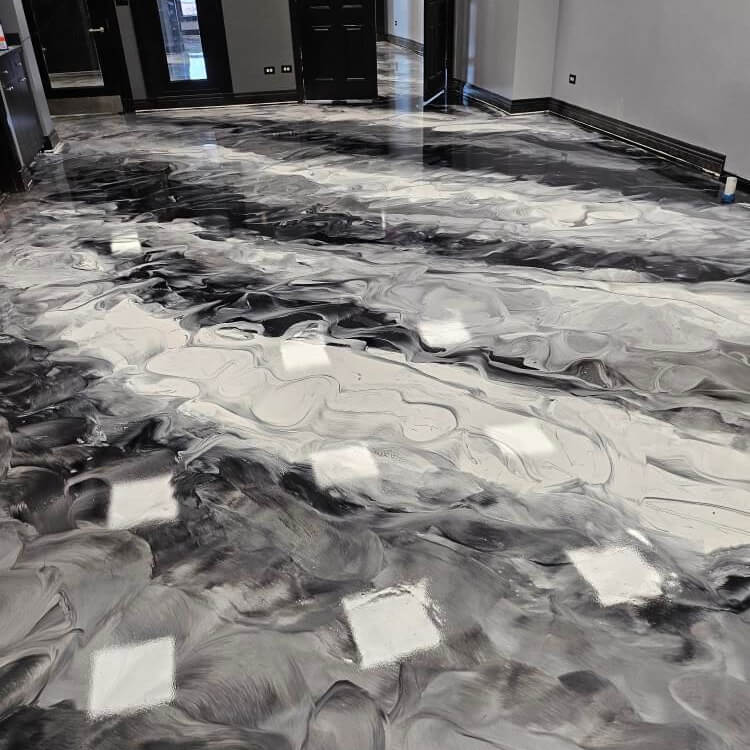
Light metallic marble epoxy floor coating
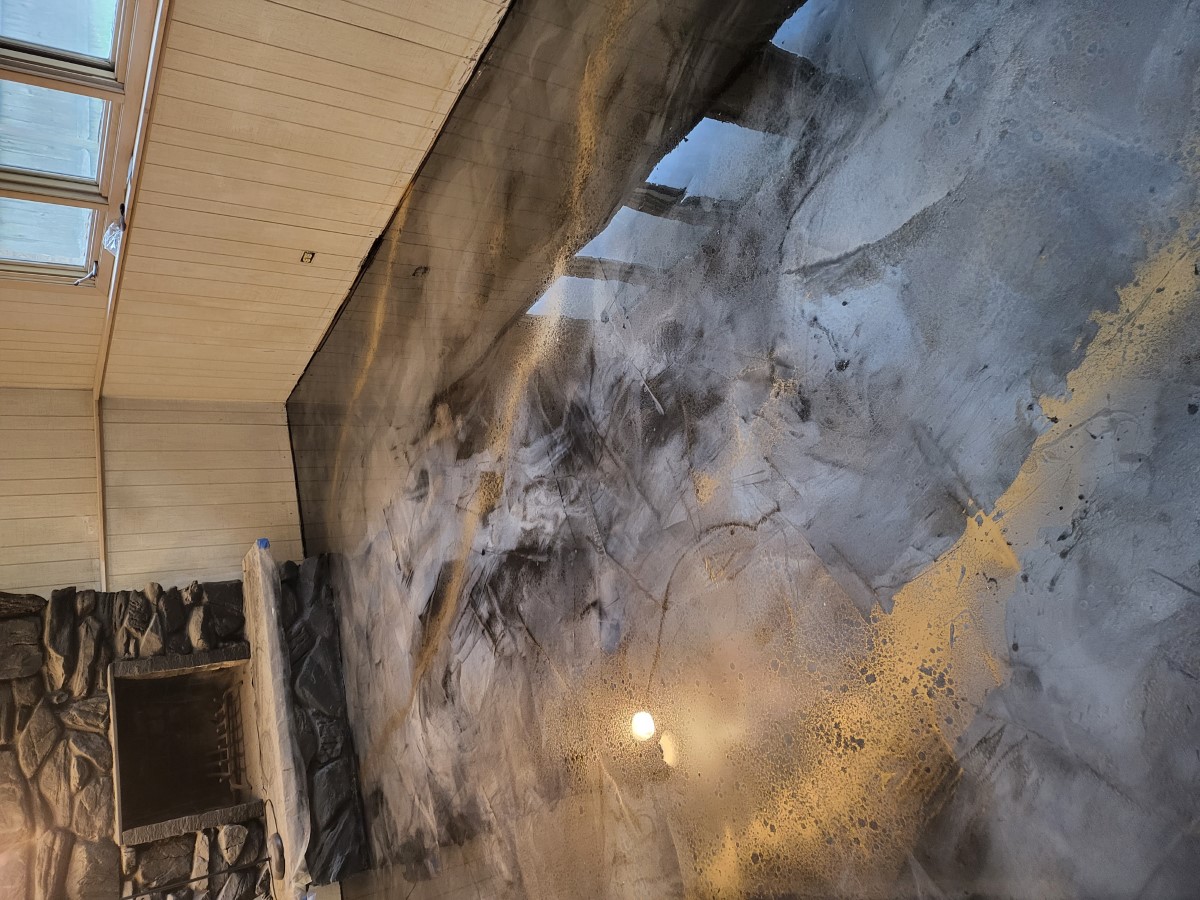
Room with a polished metallic epoxy floor in gold and black

Rooms that suit a dark floor, rooms that suit a light one

Dark floors suit rooms that are meant to feel enclosed and considered. A media room, a home bar, a den or a lower-level lounge, lit low in the evening and furnished to be sat in, gets more from a dark pour than from anything else you could put down, because the depth in the floor reads under low light and the room settles around it. The same is true of a showroom or a reception lit by spotlights, where a dark floor makes whatever stands on it the thing you look at.

Light floors suit rooms that are meant to feel open. A lower level with a run of windows, a studio, a home office, a hallway or a small retail room gets bigger and brighter on a pale metallic, because the floor returns the daylight and the downlights instead of absorbing them, and the movement in it reads as texture rather than as contrast. Where a ceiling is low or the room is narrow, a light floor does more for it than a paint color can.

Some rooms could go either way, and those are the ones worth talking through on site. A family room off a kitchen, an open-plan lower level, a salon or a small office can carry a dark floor with light walls or a light floor with dark fixtures, and which way round is right depends on how the room is lit, what is already in it and what it is for.

What each side of the choice is like to own

The wearing layer on both is a clear topcoat, and everything that happens to the floor happens to that. Shoes, chair legs, furniture feet, the dog and the weekly mop all land on a hard sealed surface rather than on the metallic coat beneath it, so the depth stays as it was poured whichever tone you chose. Cleaning is the same on both: a sweep and a damp mop, with no grout, no seams and no porous joint for a spill to settle into.

Where they differ is in what they show between cleans. A dark gloss floor shows dust, lint and footprints more readily, in the same way a dark car does, and it rewards being wiped over more often, which in a small evening room is no trouble and in a busy hallway is worth knowing before you choose. A light floor hides dust and shows the odd dark mark instead, a scuff from a black sole or a dropped coffee, both of which wipe off, and it stays looking clean longer in a room with a lot of traffic through it.

Both keep their depth. The color and the movement are inside the coat rather than printed on top of it, so a dark floor does not wear pale along the path from the door and a light floor does not wear through to something else underneath, and neither dates when the furniture and the paint around it change.

Base, pigment and sheen on each side of the line

On a dark floor the base is the anchor and the pigment is the light in it. A black or charcoal base with a silver, pewter, bronze or copper pigment worked through gives movement that reads as veins of light across a deep surface, and the more contrast between the two, the more dramatic the floor. Worked quietly, the same pair reads almost as a single dark stone.

On a light floor the base carries the light and the pigment gives it depth. A pearl, ivory or pale gray base with a darker or a warmer pigment through it gives a floor that reads as soft movement rather than as veining, and that changes through the day as the light coming into the room changes. It can be pushed toward contrast with a strong pigment, but most light floors are chosen precisely because they are quiet.

Sheen is the third decision and it lands differently on each. A high gloss on a dark floor is the deepest effect a metallic can give, and also the one that shows the most between cleans; a satin on a dark floor keeps the depth and hides the day. On a light floor a high gloss returns the most daylight and a satin softens it, and because a light floor forgives dust, the gloss is usually the easier choice there. All three are settled in the room under its own light rather than from a photograph.

What the grind has to do under a dark or a light floor

A reflective floor shows what is under it, and a light floor in daylight shows it most of all, so the preparation on this finish is more visible in the result than on any other coating we install. The slab is diamond-ground open so the system keys into it mechanically, and tile adhesive, carpet glue, paint, old sealer and any previous coating come off in the same pass, right up to the walls and into the corners.

Dark and light floors show different faults. A dark gloss shows a ridge or a dip in the slab as a break in the reflection; a light floor shows a crack or a filled hole as a line of shadow under the pigment. So the grind is used to bring the slab as flat as it can be brought, and every crack, control joint and old fixing hole is opened out, cleaned and filled flush before the base coat goes down, whichever tone the room is getting. Where the slab cannot be brought far enough for the finish you want, we say so before we pour.

Edges and thresholds are detailed rather than reached. Where the floor meets a stair, a door threshold, a built-in cabinet or a different finish in the next room, the termination is cut in cleanly, and on a light floor in particular the line where the pour stops is part of what you see.

Diamond grinding a slab flat before a metallic pour

Deciding dark or light in the room, under its own light

We come out and look at the room with you, under the light it actually has, and the first thing we talk through is which way the room wants to go. Then the base, the pigment and the sheen against the walls, the furniture, the windows and the fixtures. Metallic is the least suited of anything we install to being chosen from a picture, and the dark-or-light decision in particular is one that only makes sense standing in the room.

If you already lean one way, say so, and if you do not, that is what the visit is for. We will tell you from experience with rooms like yours which tone the light and the layout favor, and where a room could honestly go either way we will say that too rather than push one.

The job is quoted from that visit, by the people who will pour and work the floor.

Room with a metallic epoxy floor reflecting light from the windows

Winfield rooms this floor goes into

We cover Winfield and the neighboring DuPage suburbs from our shop in Roselle, and the people who come out to look at the room are the people who pour the floor.

Winfield is a village of houses more than businesses, and the rooms this floor goes into here are mostly in homes: a finished lower level, a family room, a hall, a home office or a bar, in houses that range from older village homes near the center to the subdivisions built around them since. A lower level with windows on one side and a media room at the other end is a room that could go either way, which is exactly the decision this page is about.

Have a metallic floor priced for your Winfield room

We work throughout Winfield and the surrounding DuPage suburbs from our shop in Roselle, with our own crew rather than subcontracted labor. The visit is free and commits you to nothing. Tell us which room it is, how it is lit and whether you are leaning dark or light, and we will talk through the bases and pigments worth considering from experience with rooms like yours, settle the sheen in the room and quote the job. Call (630) 206-5602 or email info@evolveconcretecoating.com to arrange a visit. We answer Monday to Sunday, 9 AM to 6 PM.

Areas We Serve

Proudly delivering professional concrete coatings across these Illinois suburbs and surrounding communities.

Every Floor Starts With a FREE Estimate

Contact Us

Thank you! Your submission has been received!
Oops! Something went wrong while submitting the form.