Garage Floor Coatings in Wheaton, IL

A sealed garage floor that wipes clean and stops the dust, in flake, metallic or grind and seal. Including floors that have been coated once already and let go. We take the old system off properly before anything new goes down.
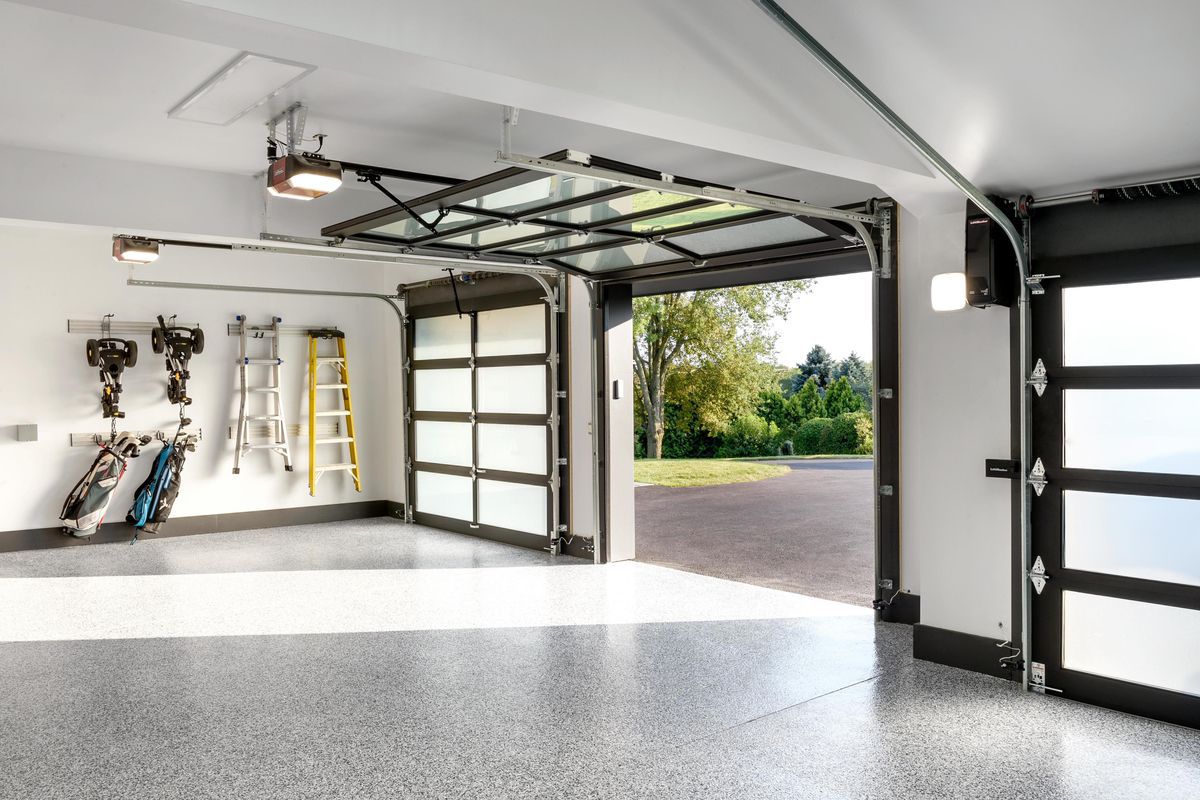
Finished epoxy garage floor

What you get when the floor is done properly

A seamless surface bonded to the slab, with nothing for salt, oil or dust to get into and no edge anywhere for a tire to catch and lift. Salt off the car sits on top until it is mopped away rather than soaking into the concrete. The gray powder that settles on shelving, tools and the trunk of the car stops, because the slab that was shedding it is sealed.

What is in the build is the same regardless of which finish you choose. The floor is diamond-ground so the system keys into the concrete mechanically, cracks and control joints are opened out and filled so the finished surface runs across them instead of tracing them, and a topcoat goes over the whole thing chosen for what the room actually takes. You pick color, sheen and flake blend from samples put down on your own floor.

Every quote states the preparation, the coats and the topcoat, so you can hold it against anything else you have been sent. Three systems are available: epoxy flake for a garage still worked in, metallic where the room has become somewhere you bring people, and grind and seal as the lightest build, keeping the look of the concrete under a hard topcoat. Finished garages are on the gallery.

Garage floor after epoxy coating, sealed and seamless
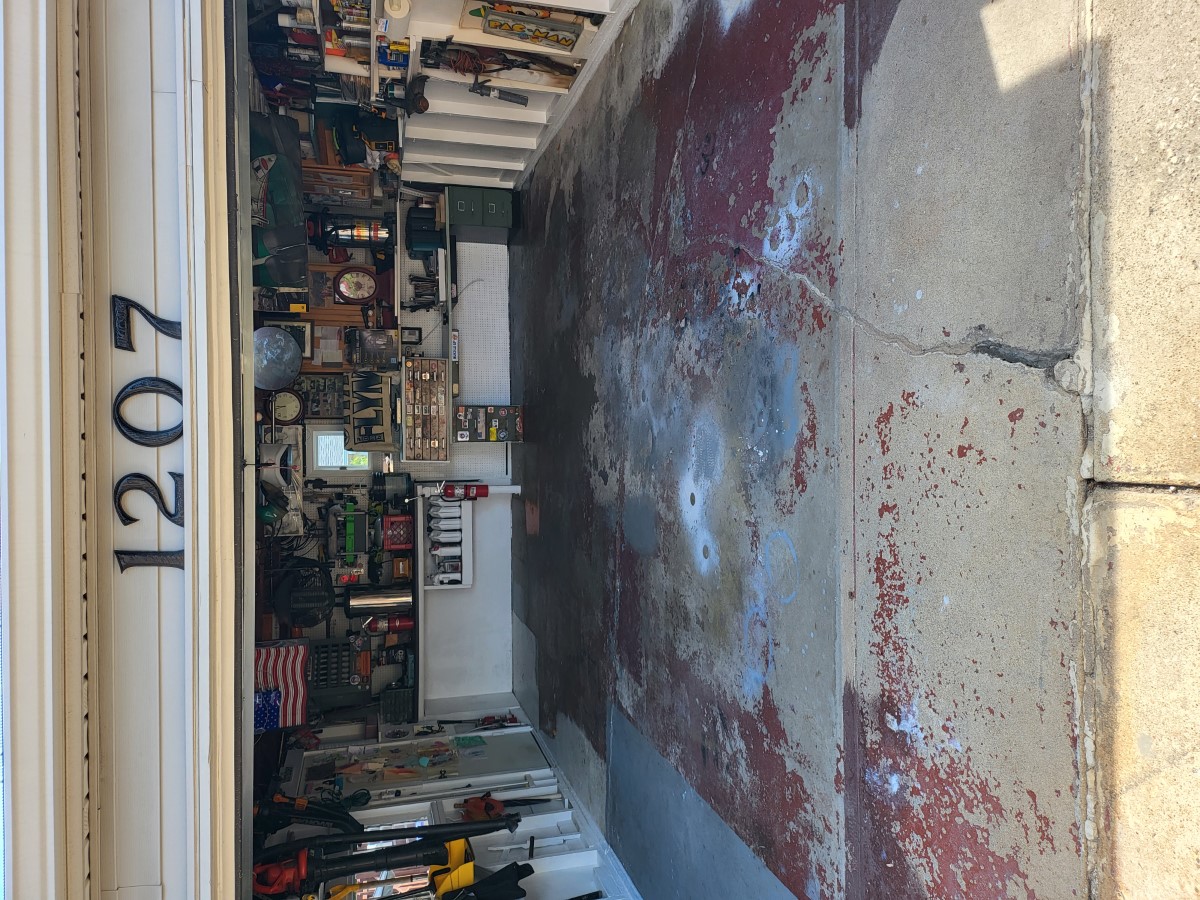
Garage floor with worn, peeling coating before removal

What actually happens to a floor that has already failed

Plenty of the garages we are called to have been coated before. Usually it is a kit rolled on by the owner or a cheap single-day job, and it is peeling in sheets, lifting in patches where the car parks, or flaking at the door where the water comes in. The useful thing is that a failed floor tells you exactly why it failed, and that is worth reading before anyone quotes a new one.

Peeling in large clean sheets means it was never bonded. The concrete underneath will usually look pristine, almost polished, because nothing ever keyed into it. That is the signature of acid etching instead of grinding: the surface was chemically washed rather than mechanically opened, so the coating sat on the slab as a film and was only ever held there by its own adhesion.

Lifting in round patches where the car sits is hot tire pickup, and it is a thickness and bond problem rather than a heat problem. A warm tire parks on a thin, poorly attached film, sticks to it, and takes a disc of it away when the car pulls out. Flaking that starts at the door and works inward is usually moisture and salt getting under an edge that was never properly cut in or sealed. None of these are reasons to give up on coating the floor. They are all reasons the first one was not really a floor system.

Why the second attempt is the one that lasts

The old coating has to come off, and that is most of the work. It is removed mechanically, by grinding the slab down past it rather than by stripping it chemically, and the grinding continues until what is left is clean, sound, open concrete. Any patch of the old system left in place would be the weakest thing on the floor and the new build would only be as good as whatever it was stuck to.

What that leaves you with is better than a slab that has never been coated at all, because the removal has already taken off the weak top layer of laitance along with the failed system, and because the slab has now been seen properly. Damage that was hidden under the old coating, cracks, spalling at the door, previous patches, is exposed while there is still time to deal with it, and it gets filled and made good before any new material goes down.

Then the build is thickness rather than film. A flake system is put down in coats, with flake broadcast into wet resin and a topcoat over it, which is a different order of thing from the couple of thousandths of an inch a rolled kit leaves behind. That difference in bond and in build is the entire reason the second floor behaves differently from the first, and it is most of what you are paying for.

Concrete floor preparation by diamond grinding

What the visit and the quote cover

We come out and look before quoting, and on a floor that has already been coated that visit matters more than usual, because what is on there now decides how much removal the job carries.

The visit is free and commits you to nothing. We measure up, work out what the existing system is and how well it is holding, check the slab underneath where we can see it, and talk through which of the three systems suits how you use the space.

You leave with a written specification covering the removal, the preparation, the coats and the topcoat, in enough detail to compare against anything else you are quoted, including whatever you were told the first time.

Epoxy flake garage floor showing the flake blend

Have your Wheaton garage floor looked at

We cover Wheaton and the neighboring DuPage suburbs from the shop in Roselle, and the crew that removes the old floor is the crew that lays the new one. The visit is free and commits you to nothing. If your floor has already been coated once, bring us out before you commit to anybody, because how much of that system has to come off is the single biggest variable in the price and it cannot be judged from a photograph. A quote written without seeing it is a guess, and it is usually the reason two prices for the same garage come back thousands of dollars apart. We will tell you what is on there, what has to go, and what it will take to do it once. Call (630) 206-5602 or email info@evolveconcretecoating.com. We answer Monday to Sunday, 9 AM to 6 PM.

Areas We Serve

Proudly delivering professional concrete coatings across these Illinois suburbs and surrounding communities.

Every Floor Starts With a FREE Estimate

Contact Us

Thank you! Your submission has been received!
Oops! Something went wrong while submitting the form.