Concrete Sealing in Villa Park, IL

Interior concrete sealing for Villa Park units and workshops, closing the slab the building already has so a leased floor stops making dust and starts cleaning, without anything being built or fitted over it.
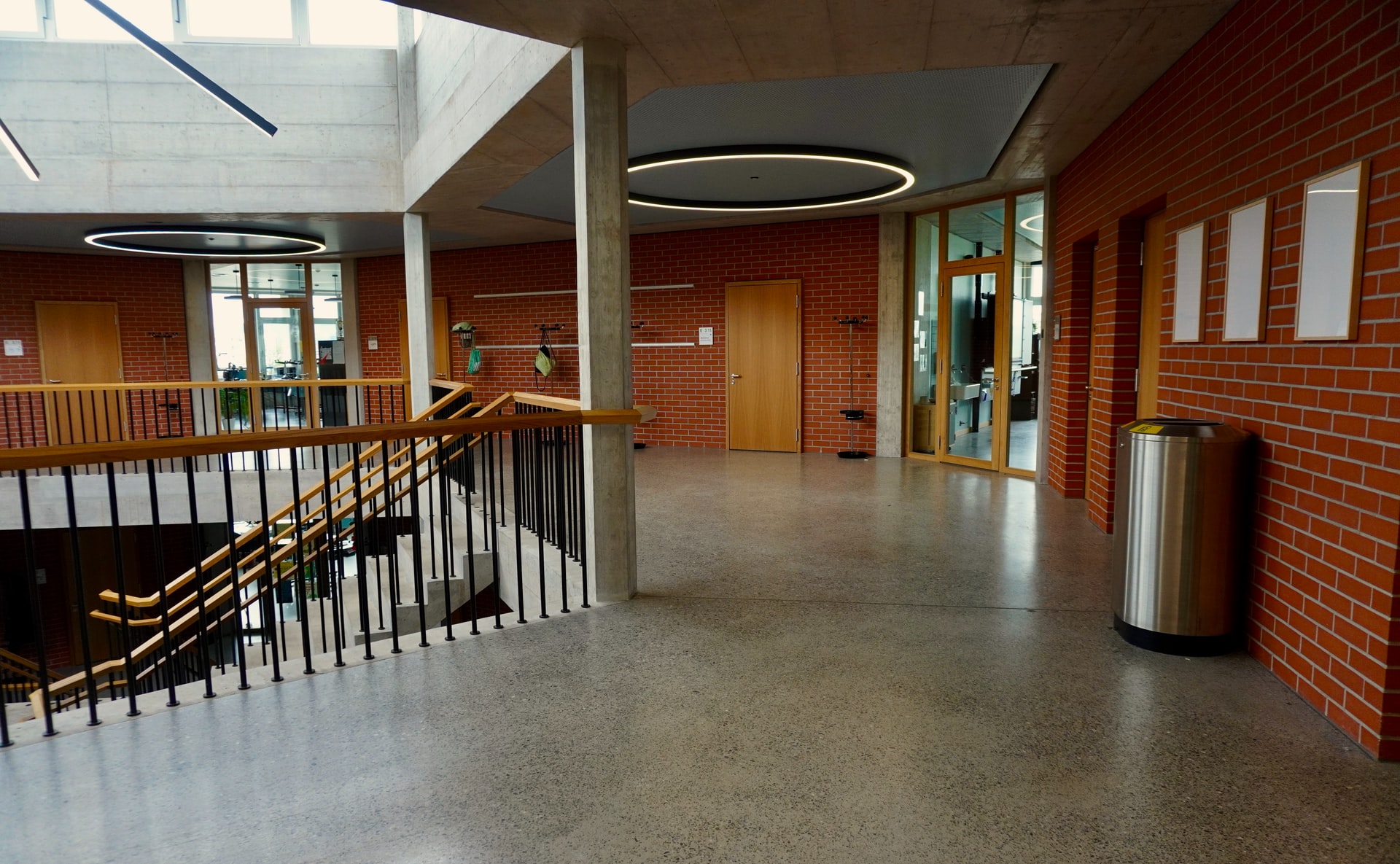
Concrete sealing on an interior floor

Sealing a floor you work on but do not own

Sealing keeps the floor exactly where it is. The surface is prepared, a sealer is worked into the concrete, and the slab stays the slab, closed at the top and no longer open to everything that used to soak into it. Nothing is laid over it, nothing is built up off it and nothing is fixed down, which is what makes it the sensible treatment for a floor held on a lease rather than owned.

That matters commercially as much as practically. A fitted floor covering in a leased unit is money spent on something that stays in the building, wears out on a schedule of its own and has to be lifted and disposed of at some point. Sealing is a treatment of the asset that is already there, at a fraction of the cost per area, and it improves the thing the landlord owns without you having installed anything you would ever have to remove.

For the tenant the whole return is in how the floor behaves. Every quote states the preparation, the passes, the sealer and which areas are being treated differently before a date is agreed, so it can be compared properly and taken to whoever has to approve it. Sealed and ground floors we have finished are on the gallery.

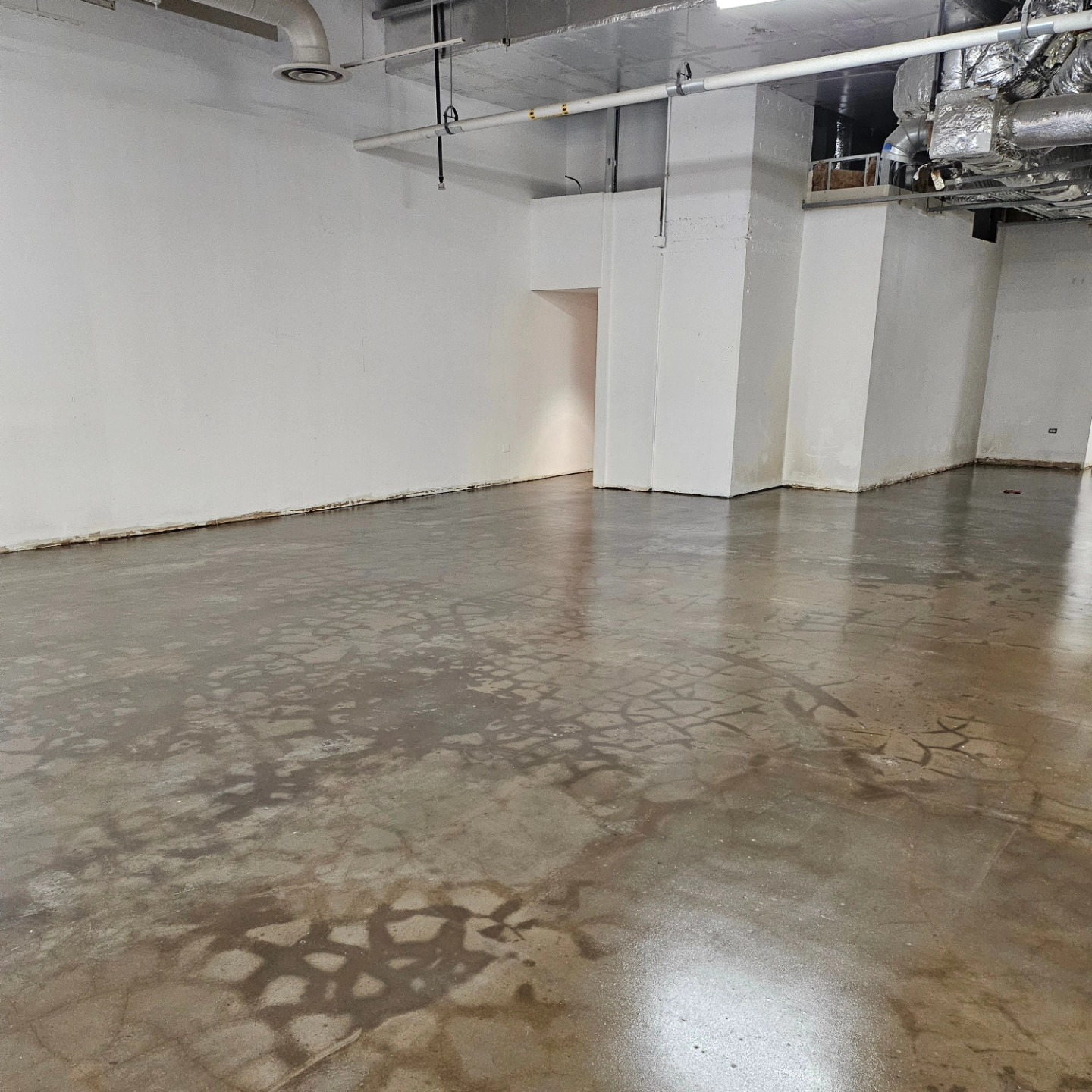
Interior space with a polished concrete floor showing mottled sealing patterns
Warehouse floor inside a commercial building

Units, workshops and the storage behind them

Trade and production units are the most common case. The floor takes pallet trucks, hand trucks, wheeled stock and delivery traffic all day, and under that duty an untreated slab gives fines back continuously. Closing the surface stops the floor being the thing that dirties everything moving across it.

Workshops and assembly space are the second, and the requirement there is a floor that can be worked on. Parts get put down on it, things get spilled on it, and it gets swept several times a day. A closed surface lets a spill sit long enough to be dealt with and lets a sweep actually lift what is on the floor rather than moving dust from one end of the bay to the other.

Storage and warehouse space inside the same building is the third, and it is usually the largest footprint and the cheapest to treat per square foot. Racked and stacked space is where the dust ends up on the stock, and it is normally worth including even when the reason for the survey was somewhere else in the unit.

Then the parts that connect them: the aisles, the route from the loading door to the back, the plant room and any office or counter area inside the unit. It is interior work throughout, on floors inside the premises.

What it does for the people working on it

Dust is the first thing to go and the change people notice. An open slab produces fines under any wheeled traffic at all, and in a working unit that means dust on the stock, on the shelving, on the benches and on whatever is going out to customers. Sealing removes the floor as the source rather than managing the consequences.

Cleaning stops being a losing job. On a closed surface dirt comes up instead of going in, so a scrubber or a mop returns the floor to the same condition each time rather than gradually darkening the routes everyone walks. Anything that goes over stays on top long enough to be wiped up, which in a food, packing or assembly area is the difference between a cleanable floor and one that is merely swept.

The third is the one that shows up at the end of a tenancy. There is nothing to renew and nothing to write off, because no covering was installed. When the surface eventually needs attention, the answer is renewing the sealer on the floor that is already there.

What sealing will not do is build a wear layer, and it is worth being straight about that. It hardens and closes the top of the slab; it does not add thickness over it. Where the duty is genuinely heavy, a coating is the better spend and we will say so.

How far to take a floor on a fixed term

Both routes keep the existing floor. What separates them is how much is done to the surface before the sealer goes on, and on a leased floor the length of the term is a legitimate part of that decision rather than a distraction from it.

A penetrating seal is the lighter of the two. The floor is cleaned and prepared, then the sealer is applied and driven into the concrete so it hardens and closes the surface without changing its appearance much. Where the requirement is dust control and cleanability across a working area, that is usually all that is needed, and over a large footprint it is the least expensive thing that genuinely works.

Grind and seal is the fuller treatment. The slab is diamond-ground first, which cuts back to sound concrete, takes off old sealers, coatings and adhesive and evens the surface out across the whole floor before it is sealed. It costs more because the grinding is the work, and it is the right call where the existing surface is poor enough that sealing over it would lock in what is already there, or where part of the unit is seen by customers as well as used.

In a leased unit the practical answer is often to mix them: the fuller treatment where the floor is looked at or worked on hardest, the lighter one across the storage and circulation space behind it. That keeps the spend proportionate to the term you actually hold.

What has to come off before a sealer holds

Preparation decides the result far more than the choice of sealer does. A sealer applied over laitance, an old coating or adhesive residue does not penetrate. It sits on whatever is in the way and comes off with it, which is why a cheap job can look right on handover and be patchy inside a year.

In a unit that has changed hands the usual complication is the history of the floor. There is often adhesive from a covering fitted by a previous occupier and taken up badly, old line marking, patches around where equipment was bolted down, and areas that were used for something quite different from what happens there now. All of it comes off by diamond grinding rather than by etching, and how many passes it takes is decided by what we find when we start.

Contamination is the part worth checking early. Where oil or another fluid has been going into the same patch of slab for years, that area gets ground back further rather than sealed over, because contaminated concrete rejects a sealer in exactly the place that most needed it. Cracks and joints are opened out and filled in the same visit, since a sealed floor with untreated joints still collects everything in the joints.

Concrete sealing inside a business

Surveyed around the way the unit runs

We come and look at the floor before quoting, because in a working unit the access and the sequencing decide as much as the area does. We check what is on the slab now, how sound it is, how the concrete takes water, and what each part of the floor actually has to cope with.

Then we plan how it gets done around you. Racking, stock and equipment have to be moved or worked around, and most tenants have nowhere to put the contents of a unit, so the practical answer is usually to work in sections or to work outside your operating hours. That gets agreed at the survey rather than discovered on the morning we arrive. If the building owner needs to approve the work, having the written specification in hand is what makes that a short conversation.

You get that specification covering the preparation, the passes, the sealer, the joint work and which areas are being treated differently. If the floor needs more than sealing, we will say so at the visit rather than quoting the cheaper job and finding out afterwards.

Diamond grinding a slab back before the sealer goes on

Light industrial units around Villa Park

We cover Villa Park and the neighboring DuPage suburbs from our shop in Roselle, using our own crew. A good deal of the commercial space here is light industrial and trade premises in older multi-unit buildings, much of it leased rather than owner-occupied and much of it on floors that have served several different businesses.

That combination is what makes sealing the right treatment locally. The slabs are generally sound and generally old, they have usually had a covering or a coating on them at some point, and the occupier has a real interest in the floor working without wanting to install anything permanent in a building they do not own. Whether a particular slab will take a sealer evenly, and how much grinding it needs first, is a question about your concrete rather than a general one, and it is what the survey answers.

Book a survey of your Villa Park floor

We work throughout Villa Park and the surrounding DuPage suburbs from our shop in Roselle, with our own crew rather than subcontracted labor. The visit is free and commits you to nothing. We will tell you what is on the slab now, whether the concrete will take a sealer where it matters most, which of the two routes suits each part of the unit, and how the work can be sequenced so you are not shut for it. Call (630) 206-5602 or email info@evolveconcretecoating.com to arrange a time. We answer Monday to Sunday, 9 AM to 6 PM.

Areas We Serve

Proudly delivering professional concrete coatings across these Illinois suburbs and surrounding communities.

Every Floor Starts With a FREE Estimate

Contact Us

Thank you! Your submission has been received!
Oops! Something went wrong while submitting the form.