Concrete Sealing in Hanover Park, IL

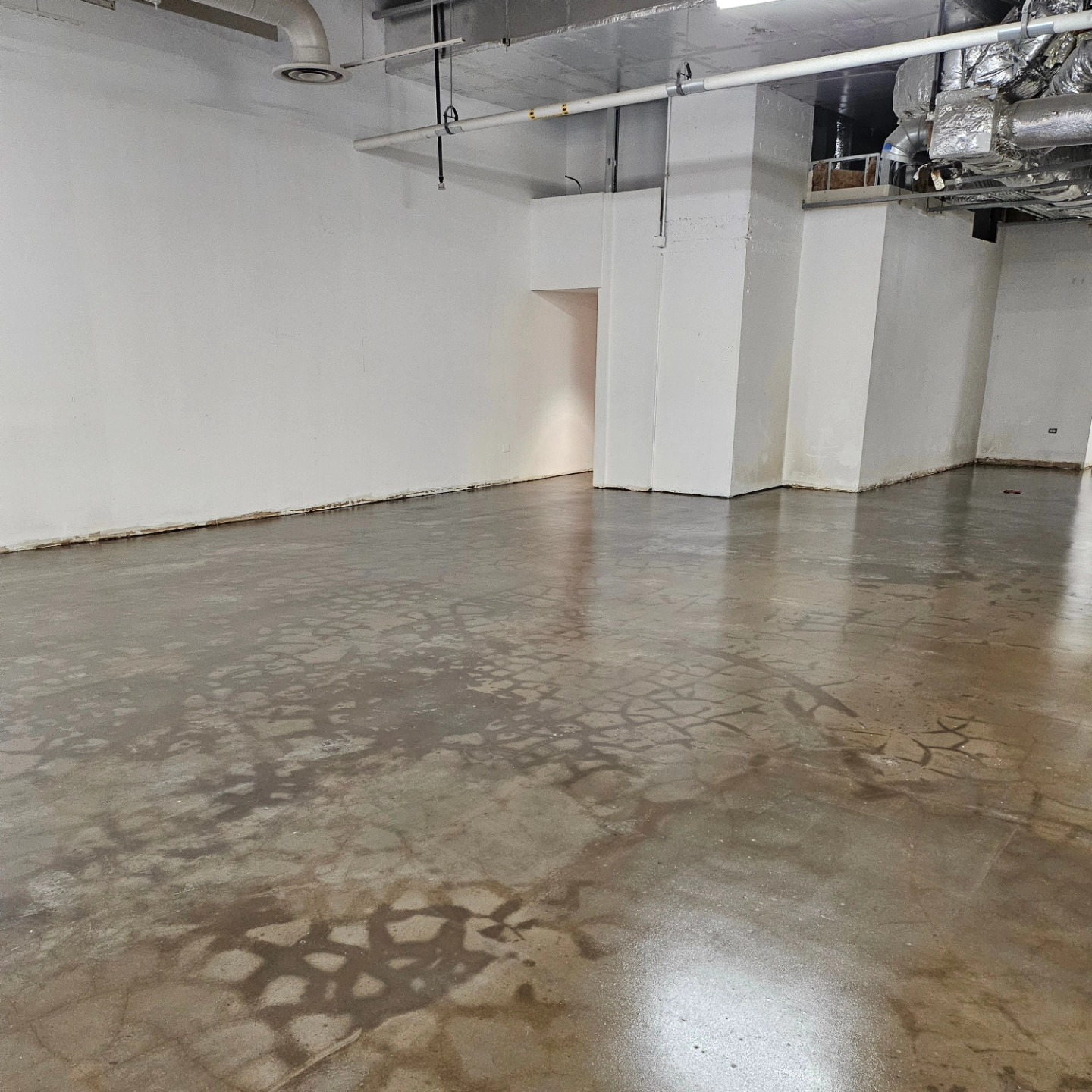
Ground and sealed concrete for Hanover Park commercial interiors, turning the slab the building already has into a finished floor with a chosen sheen, no added height and nothing laid over the top.
Ground and sealed concrete floor in a commercial interior

The concrete floor as the finished floor

Sealing keeps the slab and finishes it. The concrete is prepared, the surface is closed with a sealer and given a hard topcoat, and what you end up standing on is the building's own floor rather than a product bought and fitted over it. For a commercial interior that is a deliberate finish rather than a compromise: plain concrete, evened out and sealed, reads as an honest surface in a way a covering laid on top of it does not.

The appearance is decided by how far the surface is taken back. Grinding cuts through the weak top layer left by the original pour and exposes fresh concrete, which evens out the tone across the floor and takes the patchiness out of a slab that has had different things happen to different parts of it. Sealed after that, the floor has a consistent color and whatever level of sheen you asked for, and the character of the concrete is still visible in it.

Nothing is added to the height, which is often the reason this gets specified rather than something built up. Door thresholds, the step in from outside, floor boxes and drains all stay exactly where they are, and no trims appear across a doorway. Every quote sets out the preparation, the number of passes, the sealer, the topcoat and the sheen before a date goes in the diary. Ground and sealed floors we have finished are on the gallery.

Concrete sealing inside a Hanover Park business
Sealed concrete floor with an even tone across the whole area

A hard floor that still looks deliberate

Day to day the difference is that the floor stops absorbing things. A closed surface holds spills on top long enough to be cleaned up rather than taking them in, so what would have been a permanent shadow on open concrete comes off with the mop. In a space customers walk into, that is the difference between a floor that stays presentable and one that slowly records every accident it has ever had.

Cleaning is a mop or a scrubber and nothing else, because the surface is continuous. There is no grout to darken along the line everybody walks, no seam for grit to work into, no edge to lift and nothing to swell where water reaches it. A scrubber lifts dirt off a sealed slab instead of pushing it into an absorbent one, so the floor comes back to the same appearance each time rather than drifting darker along the routes.

It is worth saying what sealing does not do. It hardens and closes the top of the slab; it does not build a new floor on top of one, so it is not adding a wear layer to take heavy impact. Where the duty is constant forklift traffic on a fixed route, a coating is the better spend and we will say so. Sealing is the right answer where the requirement is appearance, dust control and cleanability.

Showrooms, trade counters and studio space

A showroom is the clearest case. It is a large open area where the floor is one of the biggest surfaces in the room, it takes foot traffic and occasionally a vehicle or a piece of equipment being moved through, and it needs to look intentional. A ground and sealed slab gives an unbroken surface across the whole space with the concrete's own character in it, which suits a room where the stock rather than the floor is meant to hold attention.

A trade counter or a customer-facing part of a working building is the second. That space is half commercial and half industrial: people come in off a yard, things get wheeled through, and the floor has to be both hard-wearing and presentable. Sealing handles that combination without pretending the building is something it is not, and it takes the same treatment straight through into the storage area behind if you want it to.

Studios, gyms, workshops used for teaching, offices with an industrial fit-out and the back-of-house areas that sit behind any of them are the third group. They all share the same requirement: a hard, low-maintenance, dust-free floor that does not need replacing, in a space where a fitted covering would be an expense with a limited life.

All of it is interior work, on floors inside the building.

How far to take the surface before sealing it

The real decision is how much preparation the floor gets, because that is what sets both the appearance and the durability.

A penetrating seal is the lighter route. The floor is cleaned and prepared and the sealer is driven into the concrete, hardening and closing the surface without changing how it looks a great deal. It suits a working area where the requirement is dust and cleanability and nobody is asking the floor to be a finish, and over a large area it is quicker to apply and costs less per square foot.

Grind and seal is the route that produces a finish. The slab is diamond-ground first, which cuts back to fresh concrete, removes old sealers and coatings and surface contamination, and evens the whole floor out. It is then sealed and topcoated. Because the grinding has exposed the concrete properly, the sealer works into a clean surface and the result lasts considerably better than a sealer applied over whatever happened to be there, as well as looking like something that was chosen.

The sheen is set within that. It runs from close to matte, which keeps the floor quiet and hides more, through to a high gloss that lifts the light in the room and makes the concrete's variation much more pronounced. It is worth seeing in place before deciding, because the same floor at two sheens reads as two different rooms.

What has to come off before a sealer goes on

A sealer applied over the wrong thing does not penetrate. It sits on the laitance, the old coating or the adhesive that is in the way and comes off with it, which is how a sealing job can look right on handover and be lifting in patches within a year. So the first question is what is on the floor now.

Old sealers, previous coatings, tile adhesive, carpet glue and the weak surface layer from the original pour all have to be taken off before anything is applied. That is done by diamond grinding rather than acid etching, and how many passes it takes is decided by what turns up when we start rather than quoted from a photograph of the floor.

Cracks and joints get opened out and filled as part of the same work, because a sealed floor with untreated joints still collects everything in the joints. Where the slab has patches or repairs in it we will tell you plainly that they will still be visible afterwards. Grinding evens out the tone of the concrete a great deal, but it does not turn several different pours into one, and a floor whose appearance matters is worth being honest about before it is bought.

Retail floor finished in sealed concrete

Seeing the slab before we quote the finish

We come out and look at the floor before pricing anything. We check what is already on it, how sound the surface is, whether there is anything under the current covering that changes the job, and how the concrete takes water, because a slab that will not accept water will not accept a sealer either.

Then we talk through what the space is for, which is the part that decides how far the surface gets taken back. A stockroom and a showroom are the same treatment specified two different ways, and the difference in cost between them is mostly grinding.

You get a written specification covering the preparation, the passes, the sealer, the topcoat, the sheen and the joint work, detailed enough to compare against anything else. Where a commercial space cannot close, we plan the work by zone and agree the order with you, so the areas come out of use one at a time rather than all at once.

Diamond grinding the slab back before the sealer is applied

Commercial space around Hanover Park

We cover Hanover Park and the surrounding suburbs from our shop in Roselle, using our own crew. The commercial stock here is mostly single-story: retail and service units along the main routes, trade and light industrial premises behind them, and a good deal of space where the customer-facing part and the working part of a business sit under the same roof.

That mix is what makes sealing worth looking at here. A building with a counter at the front and storage or a workshop behind it has usually been treated as two different flooring problems, with a covering at the front that wears out and bare concrete behind it that never gets addressed. Grinding and sealing the slab handles both with one finish, at a cost that works over the whole footprint, and it leaves the levels alone in a building where the threshold between the two halves is often exactly where a change in floor height would be most annoying.

Arrange a look at your Hanover Park floor

We work throughout Hanover Park and the neighboring suburbs from our shop in Roselle, with our own crew rather than subcontracted labor. The visit is free and commits you to nothing. We will tell you what is on the slab now, what is realistic for the appearance once it has been ground back, how far the surface needs taking to get there, and whether sealing is the right spend for the way the space is used or whether your money is better put somewhere else. Call (630) 206-5602 or email info@evolveconcretecoating.com to arrange it. We answer Monday to Sunday, 9 AM to 6 PM.

Areas We Serve

Proudly delivering professional concrete coatings across these Illinois suburbs and surrounding communities.

Every Floor Starts With a FREE Estimate

Contact Us

Thank you! Your submission has been received!
Oops! Something went wrong while submitting the form.