Concrete Sealing in Glen Ellyn, IL

Interior concrete sealing for Glen Ellyn commercial premises, closing the slab in stockrooms, prep areas and back-of-house space so it stops producing dust and starts cleaning properly.
Concrete sealing on a small commercial floor

Sealing the floors nobody sees

Sealing takes the concrete a building already has and closes it. The surface is prepared, a sealer is worked into the slab, and the floor stays exactly where it is, hardened at the top and no longer open to everything that used to soak into it. It does not add color and it does not lay anything over the top, which is the point: it is the cheapest way to make a plain concrete floor behave.

The change is in the porosity. Untreated concrete takes up water, oil and whatever is spilled on it, and under any wheeled traffic at all it gives fines back continuously. Closing the surface stops both. Spills sit on top long enough to be dealt with, the floor stops shedding into the room, and a mop or a scrubber lifts dirt off rather than working it into an absorbent surface.

For a small commercial space that adds up to a floor that can be kept clean without ever being replaced. There is no covering to wear out, no product line to match in five years and nothing to lift and dispose of. Every quote states the preparation, the passes, the sealer and any areas being treated differently before a date is agreed. Sealed and ground floors we have finished are on the gallery.

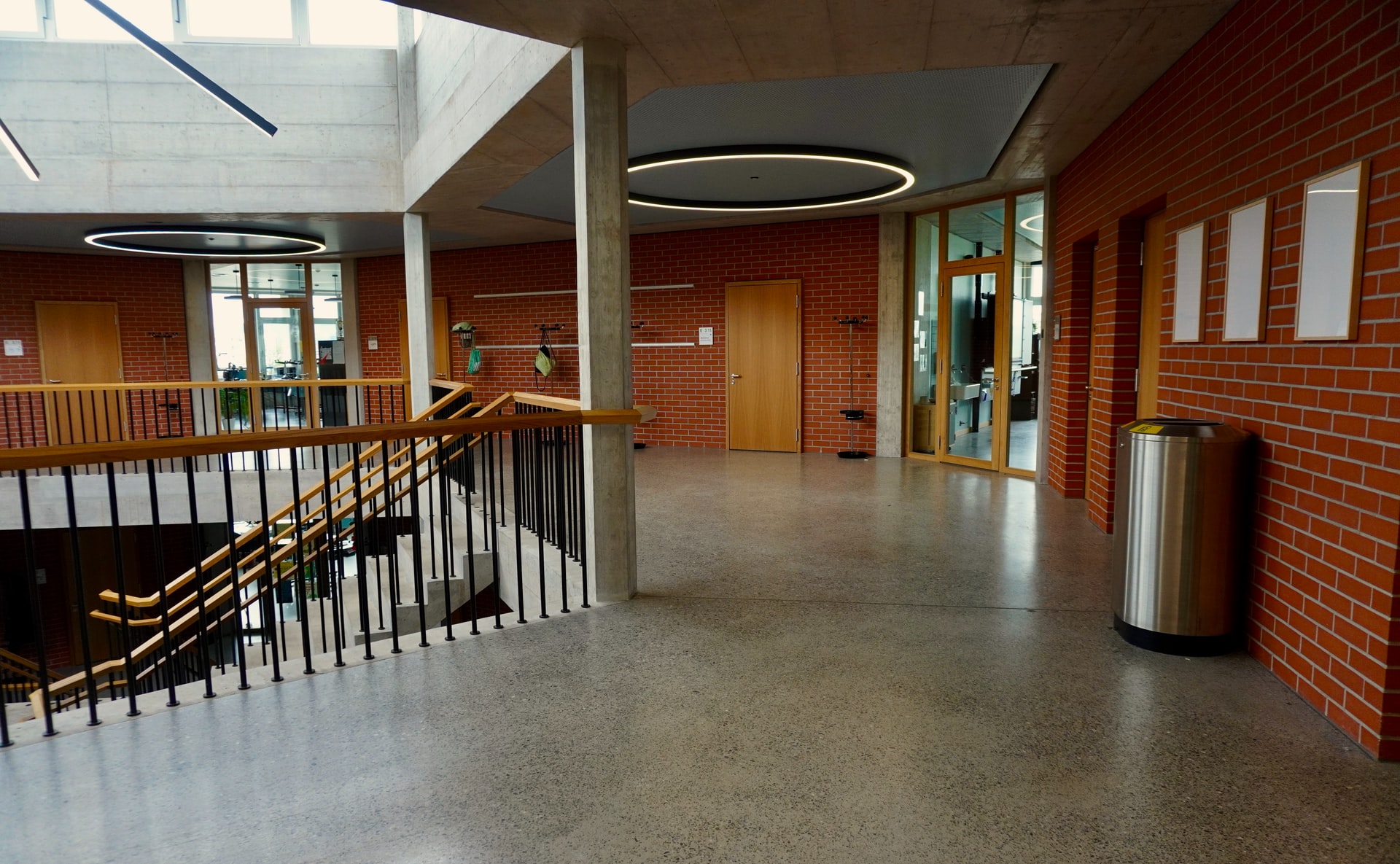
Sealed concrete floor in a basement below a Glen Ellyn unit
Sealed concrete floor in a back-of-house working area

Stockrooms, prep areas and back corridors

The stockroom is the most common job and usually the most overdue. It takes hand trucks, dropped stock and boxes dragged along the floor, it rarely gets looked at by anyone but staff, and in most small units it has never had anything done to it. Sealing turns it into a surface that sweeps and mops instead of one that produces dust into everything stored on it.

Prep areas and back-of-house working space are the second case. Food prep space, dispensaries, back rooms behind a counter and any area where things are made up or packed have a cleanability requirement that bare concrete simply cannot meet, because an open slab holds whatever goes into it. A closed, seamless surface can be cleaned to a standard and it stays that way between cleans.

Then the space that connects everything: back corridors, the route from the delivery door to the store, plant rooms, utility space and the basement under a storefront where the stock and the equipment live. All of it takes light traffic and foot traffic, none of it justifies a built-up floor, and all of it is easier to work in once the concrete is sealed rather than powdering underfoot.

It is interior work throughout, on floors inside the premises.

Less to clean, and nothing to replace

Dust is the first thing to go. An unsealed slab produces fines every time something is wheeled or dragged across it, and in a stockroom that means the dust ends up on the stock, on the shelving and on the packaging that goes out to customers. Sealing removes the floor as the source, which in a small unit with limited storage is worth more than anything else the treatment does.

Cleaning gets faster and more effective at the same time. On a closed surface dirt comes up instead of going in, so the floor returns to the same condition each time rather than getting gradually darker along the routes everyone walks. Anything that goes over stays on top long enough to be wiped up, so a spill in a back area stops being something that will be visible for the rest of the lease.

The third thing is that there is nothing to renew. A fitted floor covering in a back area has a life and a replacement cost, and it usually gets replaced late and badly because it is not a space anyone wants to spend money on. A sealed slab does not have that cycle. When it eventually needs attention, the answer is renewing the sealer on the floor that is already there.

What it will not do is take heavy impact, and it is worth saying so. Sealing hardens the surface of the slab, it does not build a wear layer on top of it, so where the duty is genuinely heavy a coating is the better spend.

The two ways a slab gets sealed

Both routes keep the existing floor. What separates them is how much is done to the surface before the sealer goes on, and the right answer depends on the condition of the concrete and what the room is for.

A penetrating seal is the lighter of the two. The floor is cleaned and prepared, then the sealer is applied and driven into the concrete so it hardens and closes the surface without changing its appearance much. In a back area where the requirement is dust control and cleanability, that is usually all that is needed, and over a small footprint it is quick and inexpensive.

Grind and seal is the fuller treatment. The slab is diamond-ground first, which cuts back to sound concrete, takes off old sealers, coatings and adhesive, and evens out the finish across the whole floor before it is sealed and topcoated. It costs more because the grinding is the work, and it is the right call where the existing surface is in poor enough condition that sealing over it would just lock in what is already there, or where the area is going to be seen as well as used.

In a small unit it is common to do both: the fuller treatment where the floor is visible, the lighter one across the storage and utility space behind it.

Lifting what is down before sealing what is under it

Preparation decides the result far more than the choice of sealer. A sealer applied over laitance, an old coating or adhesive does not penetrate; it sits on whatever is in the way and comes away with it, which is why a cheap sealing job can look fine on handover and be patchy inside a year.

In a small commercial unit the usual complication is what is already on the floor. Back areas tend to have had vinyl, tiles or sheet flooring fitted at some point and taken up badly, and what is left is adhesive residue, fragments and a slab nobody has looked at since it was poured. All of that comes off by diamond grinding rather than acid etching, and how many passes it takes is decided by what we find when we start.

Cracks and joints are opened out and filled in the same visit, because a sealed floor with untreated joints still collects everything in the joints. Where a floor has taken a spill for years, that area gets ground back further rather than sealed over, because contaminated concrete rejects a sealer in exactly the spot that needed it most.

Untreated stockroom slab shedding dust before sealing

Fitting the work around opening hours

We come and look at the floor before quoting, because in a small unit the access and the sequencing matter as much as the square footage. We check what is on the slab now, how sound it is, how the concrete takes water and what the space actually has to cope with.

Then we plan how it gets done. A stockroom has to be emptied before it can be sealed and most small businesses have nowhere to put the contents, so the practical answer is usually to work in sections, or to work around the days and hours the premises are closed. That gets agreed at the survey rather than discovered on the morning we arrive.

You get a written specification covering the preparation, the passes, the sealer, the topcoat where one is included, the joint work and which areas are being treated differently. If the floor turns out to need more than sealing, we will say so at the visit rather than quoting the cheaper job and finding out afterwards.

Diamond grinding old adhesive off a slab before sealing

Small commercial premises in Glen Ellyn

We cover Glen Ellyn and the surrounding DuPage suburbs from our shop in Roselle, using our own crew. The commercial space here is mostly small: storefront units, professional and service premises, and older buildings on the village's main streets rather than large-footprint industrial sheds.

That shapes what sealing is useful for locally. In a unit like this, the back-of-house is often a single stockroom and a corridor, sometimes a basement reached by stairs, and it is the part of the premises that never gets a budget. The floor area is small enough that sealing costs very little in absolute terms, and the buildings are old enough that the slabs have usually had at least one covering fitted and lifted. Access is the real variable, since there is rarely a loading door and everything comes in through the front, and that is the sort of thing worth establishing before anyone quotes.

Ask us to price your Glen Ellyn floor

We work throughout Glen Ellyn and the neighboring DuPage suburbs from our shop in Roselle, with our own crew rather than subcontracted labor. The visit is free and commits you to nothing. We will tell you what is on the slab now, whether the concrete will take a sealer in the areas that matter, which of the two routes fits each part of the premises, and how the work can be sequenced so you are not closed for it. Call (630) 206-5602 or email info@evolveconcretecoating.com to arrange a time. We answer Monday to Sunday, 9 AM to 6 PM.

Areas We Serve

Proudly delivering professional concrete coatings across these Illinois suburbs and surrounding communities.

Every Floor Starts With a FREE Estimate

Contact Us

Thank you! Your submission has been received!
Oops! Something went wrong while submitting the form.