Concrete Sealing in Addison, IL

Interior concrete sealing for Addison machine shops, assembly areas and commercial units, hardening and closing the slab you already own so it stops shedding dust into the work going on above it.
Concrete sealing on an interior floor

Sealing a floor that is already in service

Concrete sealing takes the slab the building was built with and makes it perform. Nothing is laid over the top: the surface is prepared, a sealer is driven into the concrete, and what you are left with is your own floor, hardened at the surface and closed to everything that used to soak into it. In a working shop that is often the honest specification, and it is a fraction of the cost of building a new floor over the whole footprint.

What changes is the porosity. Untreated concrete is an open surface. It takes up oil, coolant, water and whatever else lands on it, and under wheeled traffic it gives fines back into the building continuously. Closing that surface stops the exchange in both directions: spills stay on top long enough to be dealt with, and the floor stops being the thing that dirties the air and the product.

It also adds effectively no height, which is why it gets specified in buildings where a built-up floor is not an option. Where machine bases, pit covers, floor drains, a dock leveler or a door threshold fix the level exactly where it is, sealing improves the floor without moving it. Every quote sets out the preparation, the number of passes, the sealer and any areas treated differently before a date is booked. Ground and sealed floors we have finished are on the gallery.

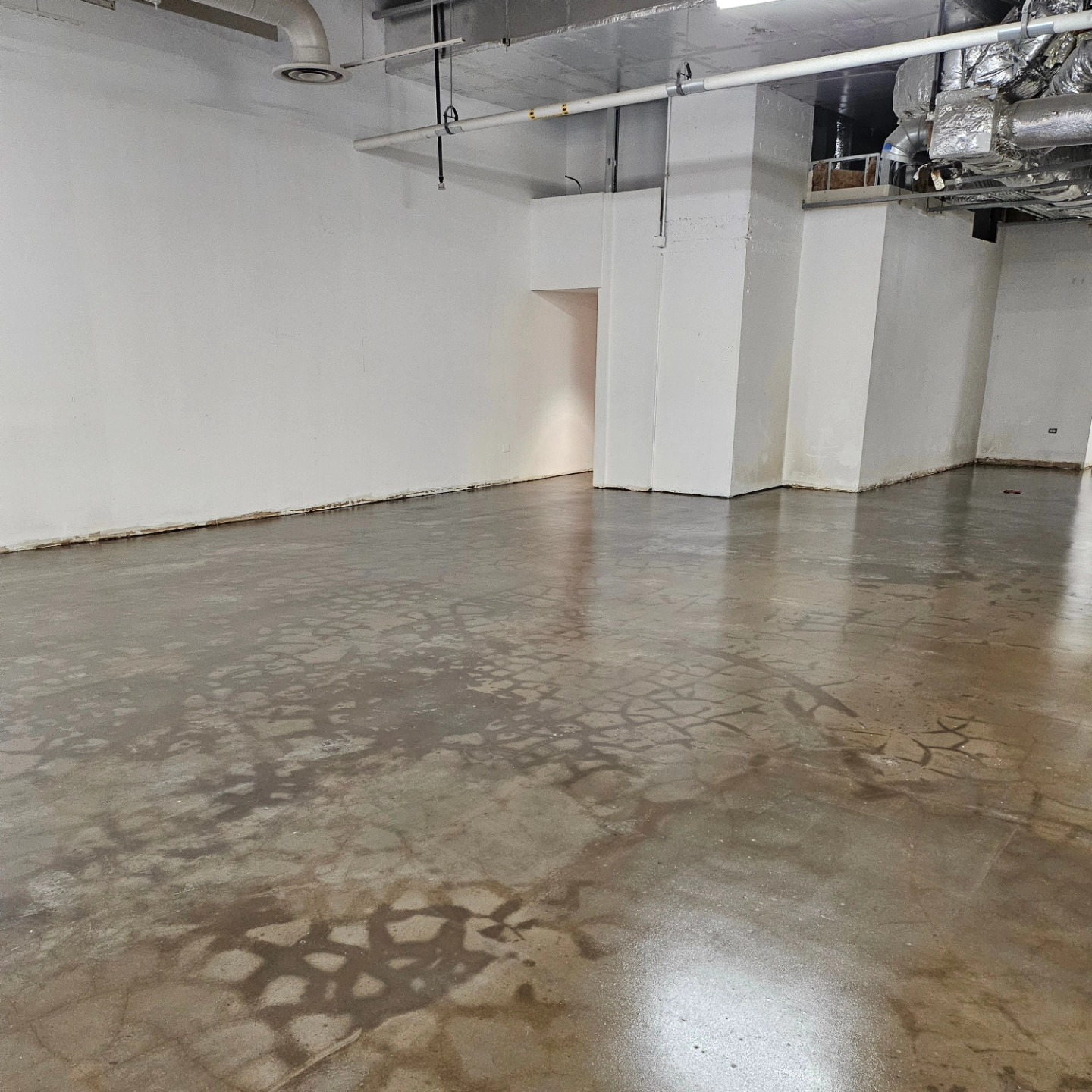
Sealed concrete floor showing the mottled pattern of the slab
Ground and sealed concrete floor inside a working building

Machine shops, assembly areas and the aisles between

Machine shops are the clearest case. The floor around a lathe, a mill or a press takes swarf, coolant and cutting fluid every working day, and on open concrete all of it goes in rather than sitting on the surface. A sealed floor holds it where it can be swept and mopped up, which is the difference between a shop floor that can be cleaned and one that gets progressively darker around each machine.

Assembly and light production areas are the second. There the requirement is usually cleanliness rather than chemical duty: parts are handled, sub-assemblies go down on the floor, and anything the slab sheds ends up in the work. Sealing removes the floor as a source of contamination, which is worth more in a building putting things together than almost anything else the treatment does.

Then the space between, which is most of the square footage in a manufacturing unit and is usually the part nobody specifies. Aisles, the route to the dispatch door, the area under and around racking, the stockroom and the tool store all take light wheeled traffic and foot traffic and little else. They rarely justify a built floor, and sealing covers them at a cost that works over a large area.

Sealing is an interior treatment throughout. It is specified for floors inside a building, not for yards, aprons or any exterior slab.

Dust in a building that makes things

Dust is the first thing to go and the thing most shops have simply stopped noticing. An unsealed slab produces fines constantly under wheeled traffic, and in a manufacturing building they do not settle politely on the floor. They get into machine ways and slides, onto finished parts waiting to go out, into the packing, onto the benches and into the air people are breathing all shift.

Cleaning changes next. On a closed surface a scrubber or a mop lifts dirt off instead of driving it into an absorbent slab, so the floor comes back each time rather than going gradually darker along the routes everyone walks. Coolant, hydraulic fluid and oil sit on the surface long enough to be cleaned up instead of leaving a permanent shadow around the machine that put them there.

What sealing does not do is add a wear layer, and it is worth being plain about that. It hardens and closes the top of the slab; it does not build a new floor on top of one. Where forklifts run the same line all day, or where chemical exposure is a daily fact rather than an occasional spill, a coating is the better spend and we will say so. Sealing is the right answer where the requirement is dust control, cleanability and appearance rather than protection against impact.

A penetrating seal or a ground and sealed floor

There are two routes and the difference between them is how much is done to the surface before the sealer goes on. Both keep your existing slab as the finished floor.

A penetrating seal is the lighter option. The floor is cleaned and prepared, then the sealer is applied and driven into the concrete, hardening and closing the surface without changing how it looks very much. It suits a working shop where the requirement is dust and cleanability and nobody is asking the floor to look like anything in particular, and over a large area it is the quicker and cheaper of the two.

Grind and seal goes further. The slab is diamond-ground first, which cuts back to fresh concrete, takes off old sealers, previous coatings and surface contamination, and evens the finish out across the whole floor. It is then sealed and given a hard topcoat. Because the grinding exposes the concrete properly, the result is more consistent, holds a chosen level of sheen, and lasts better than a sealer applied over an untouched surface. It is not a resin floor: it is the slab itself, ground back and sealed.

Which one is right is decided by the condition of the concrete and by what the floor has to do, not by preference. Working that out is the main job at the survey.

What years of oil do to a slab

Preparation decides the outcome far more than the choice of sealer does. A sealer applied over laitance, an old coating or ground-in contamination does not penetrate. It sits on whatever is in the way and comes off with it, which is why a cheap sealing job can look right on handover and be lifting in patches inside a year.

So the first question is what is on and in the floor now. Old sealers, previous coatings, adhesive left by a lifted covering and the weak surface layer from the original pour all have to come off before anything is applied. That is done by diamond grinding rather than acid etching, and how many passes it takes is decided by what we find rather than quoted from a photograph.

Contaminated areas need more work, not less. Concrete that has taken oil, coolant or hydraulic fluid for years holds it well below the surface, and those areas are ground back until they are clean or they will reject the sealer in exactly the places the shop is busiest. Cracks and joints are opened out and filled in the same visit, because a sealed floor with untreated joints still collects everything in the joints.

Concrete sealing inside an Addison business

Surveying a floor that cannot stop

We come out and look at the floor before quoting. We check what has already been applied to it, how sound the surface is, where the traffic actually runs, what gets spilled and where, and what you need from the floor once it is done.

Then we say which of the two routes fits, and we will tell you if neither does. If the duty is heavy forklift traffic on defined lines, or chemical exposure as a daily fact, we will say a coating is the better use of the money rather than selling a sealing job that will not hold up. Hearing that at the survey is more useful than working it out two years later.

Most shops cannot empty the building, so the work is planned by zone. We agree which areas come out of service and in what order, work around fixed plant and racking that is not going to move, and sequence it so production keeps running while the floor is done in sections. The written quote covers the preparation, the passes, the sealer, the topcoat where one is included, the joint work and any areas being treated differently.

Diamond grinding a contaminated slab back before sealing

Addison industrial units and the slabs in them

We cover Addison and the surrounding DuPage suburbs from our shop in Roselle, using our own crew. Much of the industrial stock here is light manufacturing, machining and assembly in single-story units, a lot of it built decades ago and rarely with the original floor treatment still doing anything useful.

That is the situation sealing is for. A sound but open slab that has spent thirty years absorbing coolant and shedding dust does not need a new floor laid over all of it. It needs the surface ground back, cleaned up and closed, with the money that saves put into the small number of areas that genuinely take a beating. Units that have changed hands or changed use are the other common case, where the floor was specified for something the building no longer does.

Get your Addison floor surveyed and priced

We work throughout Addison and the neighboring suburbs from our shop in Roselle, with our own crew rather than subcontracted labor. The survey is free and commits you to nothing. We will tell you what is on the floor now, whether the concrete will take a sealer at all in the areas that matter, which of the two routes suits the building, and whether sealing is the right spend or whether your money is better put into coating a smaller area properly. Call (630) 206-5602 or email info@evolveconcretecoating.com to arrange a visit. We answer Monday to Sunday, 9 AM to 6 PM.

Areas We Serve

Proudly delivering professional concrete coatings across these Illinois suburbs and surrounding communities.

Every Floor Starts With a FREE Estimate

Contact Us

Thank you! Your submission has been received!
Oops! Something went wrong while submitting the form.