Commercial Flooring in Lombard, IL

A seamless resin floor for shops, units and back-of-house that cleans with a mop, takes trolley wheels and winter grit without breaking up, and goes down in sections so you keep trading while we work.
Retail shop floor with a resin coating

Seamless resin floors for shops and units

One continuous surface from wall to wall, with no seams, no grout lines and no board edges anywhere in it. It is bonded into your slab rather than laid on top of it, so there is no joint for grit to pack into, no edge for a trolley wheel to catch, and nothing that has to be lifted and replaced piece by piece as it wears. Day to day that means a mop and a machine instead of a grout brush, and a unit that still presents well on a wet Saturday in February.

You choose the color and the sheen from samples we put down on your own slab, in your own lighting, so what you approve is the actual floor rather than a swatch. We quote the unit in zones, which is where the value is: the entrance and the main traffic line get the harder build and an abrasion topcoat, the sales floor gets the finish that suits how it is seen and cleaned, and the stockroom gets what it needs and nothing more.

Every quote comes to you written: preparation, coats, topcoat, finish and the order the work runs in, set out so you can hold it line for line against anything else you are holding. Commercial floors we have finished are on the gallery.

Clothing store interior with a seamless resin floor
Restaurant floor with a seamless coated surface

Trading on it every day

The floor stops being something you manage. There is no grout to scrub back to color, no vinyl seam lifting at the door, no tile to source and match when a corner goes. Closing-up cleaning gets quicker because a closed surface gives dirt nowhere to sit, and the floor comes up the same each time rather than gradually dulling along the routes people actually walk.

It also holds its appearance where customers form their impression, which is the first few feet inside the door. That strip is what everyone sees first and what takes the worst of the winter, and specifying it properly is the difference between a unit that looks maintained and one that looks tired at the threshold while the rest of it is fine.

And you keep trading through the work. We stage by area rather than closing the unit, and we can run outside your opening hours. Our own crew does the work, which is why phasing around your trading hours is something we can commit to rather than hope for.

Where these floors work

These floors go into trading units and the rooms behind them, and the two want opposite things. A shop floor takes trolley wheels, grit walked in off the street and a mop every night, and it has to look presentable while doing it. A showroom is judged on appearance first, so the sheen and the flatness matter more than the depth of the build. A stockroom is the reverse: nobody sees it, but it takes pallet trucks, dropped stock and spills, and it has to survive that without turning into a cleaning job.

Food and drink spaces are their own case. A commercial kitchen or a servery needs grip underfoot where water and grease reach the floor, coving where the floor meets the wall so there is no joint to clean out, and a surface that takes hot water and detergent every day. An office or a reception area wants close to the opposite: a smooth, quiet floor that looks deliberate and needs almost nothing doing to it.

What they have in common is that one continuous surface can serve all of them. There are no grout lines to scrub, no vinyl seam to lift at a doorway and no tile to source and match when a corner goes, which is what lets a single floor run through a unit doing several different jobs.

The four floors we lay, and which one suits the unit

Epoxy flake is the usual choice where the public walks. Colored chips are broadcast into the base coat and locked under a topcoat, which gives a lightly textured surface that hides everyday marking between cleans and keeps its grip when the floor is wet.

Solid color is the plain, uniform floor. One color across the whole slab with nothing in it to catch the eye, which suits back-of-house, stockrooms and stores where the floor is there to work rather than to be looked at. It is also the most straightforward of the four to mark out with walkways or bay lines.

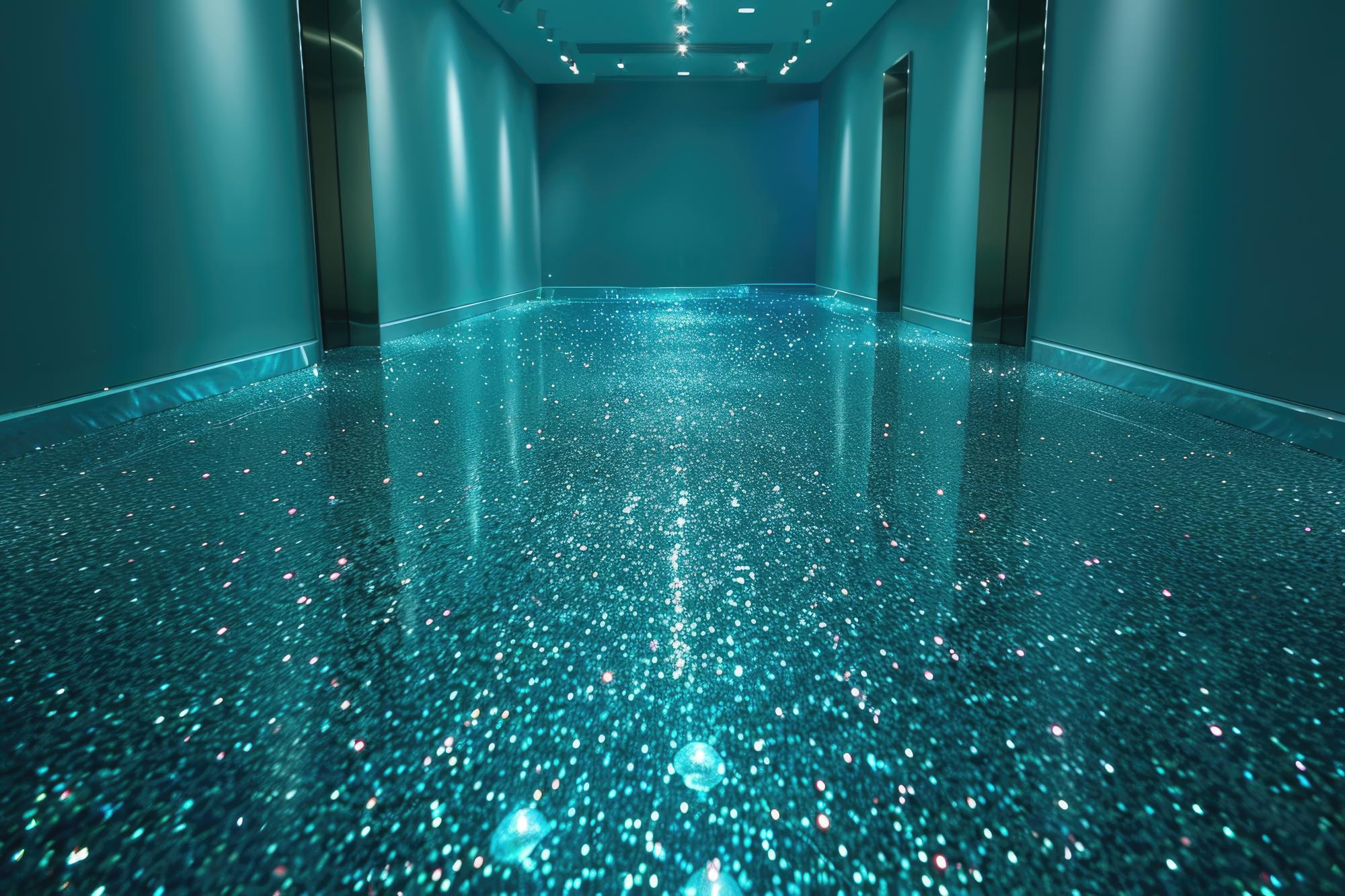
Metallic epoxy is the decorative pour. Pigment is moved through a clear resin while it cures, so the color travels in swirls and pools and no two floors finish alike. It suits a space meant to be noticed, a showroom or a customer-facing area, and it is an indoor finish only.

Grind and seal is the lower-build option, and the only one of the four that is not a coating. Rather than laying a new surface over the slab, the concrete is ground back and sealed, so the finished floor is the building's own surface under a hard topcoat. It suits a unit going for a plainer, more industrial look. Slip resistance can be broadcast into the topcoat on any of the four, specified by area, because the texture that earns its place at a threshold is a nuisance across a sales floor.

Whether it lasts is decided before we coat

Bond. A resin floor that lifts was never properly attached, and the usual shortcut behind that is acid etching in place of grinding.

We diamond-grind instead. That cuts the surface open, takes off laitance and any old coating, and leaves a profile the system keys into mechanically.

Joints and cracks are the other half: opened out and filled, or they telegraph back through a new floor within a season.

Modern hallway with a glossy commercial epoxy floor

Surveying and quoting a trading unit

We come to the unit before quoting anything. We measure it, check what the slab is doing under whatever is down now, and walk the space with you working out which areas genuinely need the harder build and which do not. That conversation is usually where the money is saved.

We plan the sequence at the same visit, because on a trading unit the staging matters as much as the specification. Work is split into sections, scheduled around your hours, and set out in the quote so you know what is happening and when.

Then you get the written specification: preparation, coats, topcoat, finish, zones and phasing. It is detailed enough to put out to other contractors, and we would rather you did that than take our word for it.

Grocery store aisle with epoxy flooring

The kind of units we work in around Lombard

We cover Lombard and the neighboring DuPage suburbs from our shop in Roselle, close enough that a survey does not need booking a week ahead. The units here run from small storefronts through to warehouse and business-park space, and those two get judged differently: one on how it looks from the door, the other on whether a pallet truck can cross it all day without finding a joint. The floor that suits each is not the same floor, which is why we look at the slab and the use before quoting either.

Get your Lombard unit surveyed and priced

We work throughout Lombard and the neighboring DuPage suburbs from our shop in Roselle, with our own crew rather than subcontracted labor. The survey is free and there is nothing to commit to at the end of it. Bring us in before you have settled on a specification and you will get a zoned quote, samples down on your own floor, and a straight answer on which areas need spending on and which do not. If the unit is trading, tell us the hours that matter and we will build the schedule around them. Call (630) 206-5602 or email info@evolveconcretecoating.com and we will get a visit booked. We answer Monday to Sunday, 9 AM to 6 PM.

Areas We Serve

Proudly delivering professional concrete coatings across these Illinois suburbs and surrounding communities.

Every Floor Starts With a FREE Estimate

Contact Us

Thank you! Your submission has been received!
Oops! Something went wrong while submitting the form.