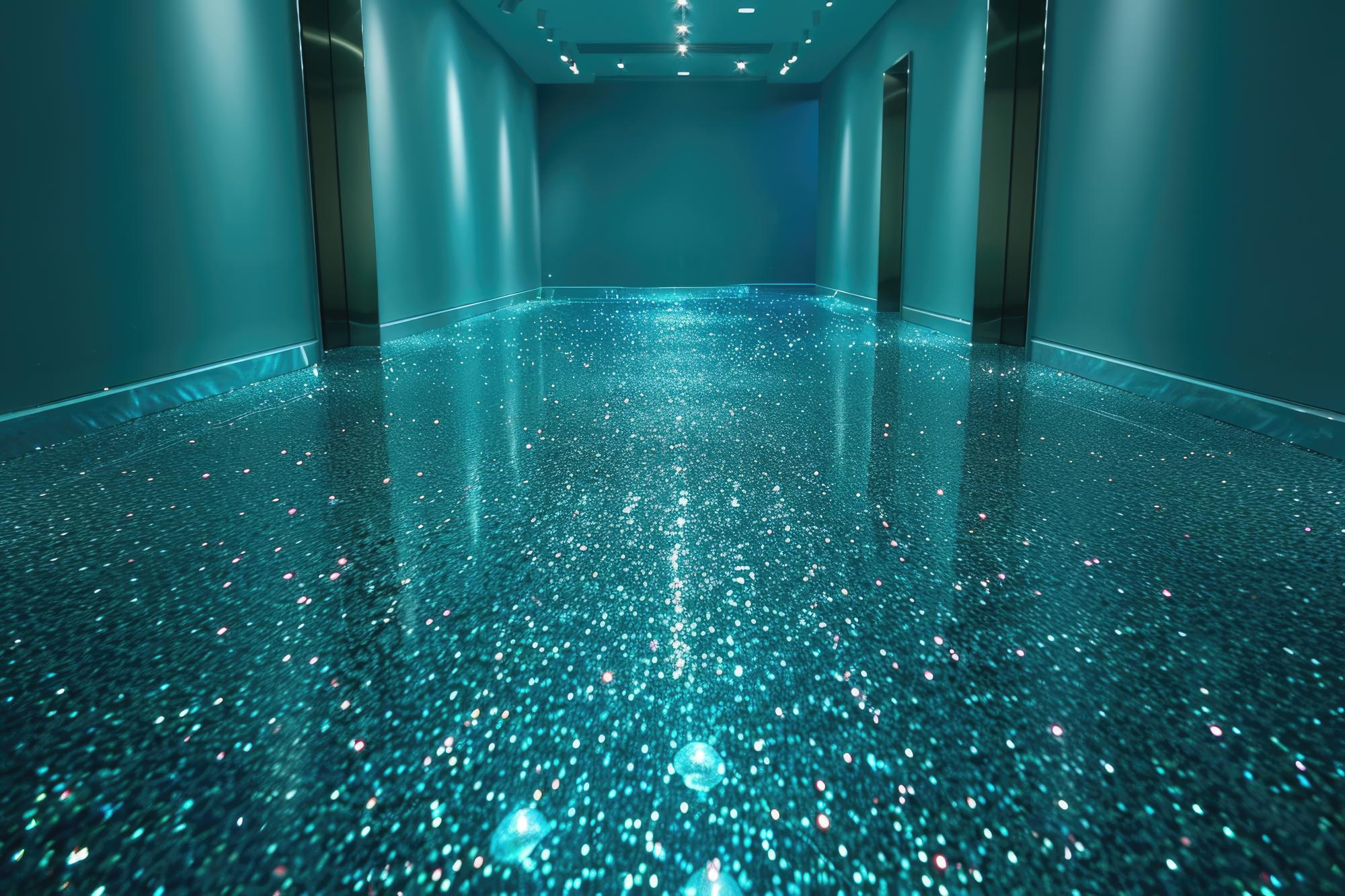
Commercial Flooring in Elk Grove Village, IL

Seamless resin floors for trade counters, service businesses and food production space, with grip specified where the floor gets wet and a build that takes what the work actually puts on it.
Trade counter floor with a resin coating

Floors for trade counters and service businesses

A single continuous surface that runs from the customer side of the counter through to the working area behind it, with no seams, no grout lines and no threshold strip where the two meet. It is bonded into the slab, so there is nothing to lift at a doorway, nothing to catch a hand truck, and no joint for water or oil to get under.

That matters in a business where the front and the back are different rooms doing different jobs but share one floor. The customer side is judged on how it looks and how it sounds. The working side takes hand trucks, dropped stock, spilled product and a mop at the end of every day. One system can serve both, but the build and the finish should change at the point where the use changes, and that is a decision made on site rather than on a plan.

Grip is specified by area rather than everywhere, because the texture that earns its place at a wash point or a walk-in door is a nuisance across a counter area that gets mopped nightly. Every quote sets out the preparation, the coats, the topcoat, the finish by area and the order the work runs in, in writing, so it can be held against anything else you are sent. Commercial floors we have finished are on the gallery.

Textured commercial kitchen floor with grip underfoot
Service bay floor with a polished coated finish

Cleaning it, and what stops looking tired

The floor stops being a maintenance item. There is no grout to scrub back to color, no vinyl seam lifting where the trolleys turn, and no tile to source and match when a corner goes. Closing-up cleaning gets faster because a closed surface gives dirt nowhere to sit, and the floor comes up the same each time instead of dulling along the lines people actually walk.

Spills stop being urgent. Oil, product, detergent and water sit on the surface until someone deals with them rather than soaking into concrete and leaving a permanent shadow. In a food or service business that is the difference between a floor that still looks run rather than worn after a few years of trading.

The part that shows first is the entrance. The first few feet inside the door take the grit and salt walked in off the lot all winter, and they are what a customer forms an impression from. Specifying that strip harder than the rest of the floor costs very little at the quoting stage and is the single most visible thing you can do to keep a unit looking maintained.

Counters, service bays, kitchens and back-of-house

Trade counters and customer areas need to look deliberate while taking constant foot traffic and whatever is wheeled across them. They are also usually the smallest part of the floor and the part everyone sees, which makes them worth specifying properly rather than absorbing into an average.

Service and workshop bays are the opposite case. They take dropped tools, dragged metal, oil, grease and cleaning solvents, and they need a surface that shrugs those off without staining or scarring. Where vehicles or equipment come inside, the floor also has to take wheels and point loads, and that changes the build rather than just the topcoat.

Commercial kitchens, serveries and food production areas are their own category. They combine water, grease and hot wash-down with a requirement to be genuinely cleanable, which means grip underfoot where the water is, coving where the floor meets the wall so there is no joint to clean out, and a surface that takes detergent daily without breaking down.

Back-of-house is the fourth, and it is where the value usually is. Stockrooms, prep areas, cold store approaches and the routes between them take pallet trucks and dropped stock, nobody sees them, and they still have to survive. A plainer, harder build back there and a better finish out front is how a sensible specification is put together.

Four floors, and which side of the counter each suits

Epoxy flake is the usual choice where the public walks and where the floor gets wet. Colored chips are broadcast into the base coat and locked under a topcoat, giving a lightly textured surface that hides everyday marking between cleans and keeps its grip when water reaches it.

Solid color is the plain, uniform floor. One color across the slab with nothing in it to catch the eye, which suits workshops, stockrooms and back-of-house where the floor is there to work rather than be looked at. It is also the easiest of the four to mark out with walkways or bay lines.

Metallic epoxy is the decorative pour, and it is an indoor finish only. Pigment moves through a clear resin while it cures so the color travels in swirls and pools and no two floors finish alike. In a service business it belongs in a showroom or a customer-facing area where the floor is meant to be noticed, not behind the counter.

Grind and seal is the lower-build option and the only one of the four that is not a coating. The slab is ground back and sealed, so the finished floor is the building's own concrete under a hard topcoat. It suits a unit going for a plainer industrial look, and it is the answer where the height at a door, a walk-in or a drain has to stay exactly where it is.

The slab under a working commercial floor

Most commercial units have had a floor covering down before, and what is under it decides the specification. Tile leaves adhesive and a bed of it, vinyl leaves the same, and an old coating may have been laid over something it should not have been. All of it has to come off rather than be covered again.

We diamond-grind rather than acid-etch. Grinding takes off adhesive, laitance and old coatings and opens the concrete so the new system keys into it mechanically. Around a kitchen, a wash area or a service bay we also expect to find contamination that has soaked in over years of use, and those areas come back until they are clean, because a system laid over grease or oil lets go exactly where the business is busiest.

Falls and drains are the other half of the job in any wet area. Drains are detailed properly, coving is formed where the floor meets the wall, and joints and cracks are opened out and filled so they do not read back through the finished floor.

Commercial kitchen floor, seamless and washable

Quoting a business that cannot close

We come to the unit before quoting anything. We measure it, look at what the slab is doing under the current floor, and walk it with you working out which areas genuinely need the harder build and which do not. That conversation usually saves more than any discount.

Staging is planned at the same visit, because for most service and food businesses the schedule is the specification. Work is split by area and run outside trading hours, overnight or over a weekend, so the counter stays open and the kitchen is handed back ready to use. We tell you what is out of service and when, before the job is booked.

Then you get the written specification: preparation, coats, topcoat, grip by area, drainage detail and phasing. It is detailed enough to put out to other contractors, and we would rather you did that than take our word for it.

Seamless coated floor running through a commercial interior

Service businesses around Elk Grove Village

Much of the commercial space we are asked to quote here sits alongside the industrial parks: trade counters attached to warehouses, repair and service businesses with a customer front, and food production units with a small showroom at one end.

What they share is a single slab serving a customer space and a working space at once, and the build should change where the use changes rather than being averaged across both.

Get a quote for your Elk Grove Village premises

We work throughout Elk Grove Village and the neighboring suburbs from our shop in Roselle, with our own crew rather than subcontracted labor. The survey is free and commits you to nothing. Walk us through the unit and you will get samples down on your own floor, a build that changes where the use changes rather than one rate across the plan, grip specified only where it is actually needed, and a schedule built around the hours you trade. Tell us when the business cannot be interrupted and we will work to it. Call (630) 206-5602 or email info@evolveconcretecoating.com to arrange a visit. We answer Monday to Sunday, 9 AM to 6 PM.

Areas We Serve

Proudly delivering professional concrete coatings across these Illinois suburbs and surrounding communities.

Every Floor Starts With a FREE Estimate

Contact Us

Thank you! Your submission has been received!
Oops! Something went wrong while submitting the form.